
,
A Record Cabinet Inspired by Nature with Our Next Make’s Partners in Making
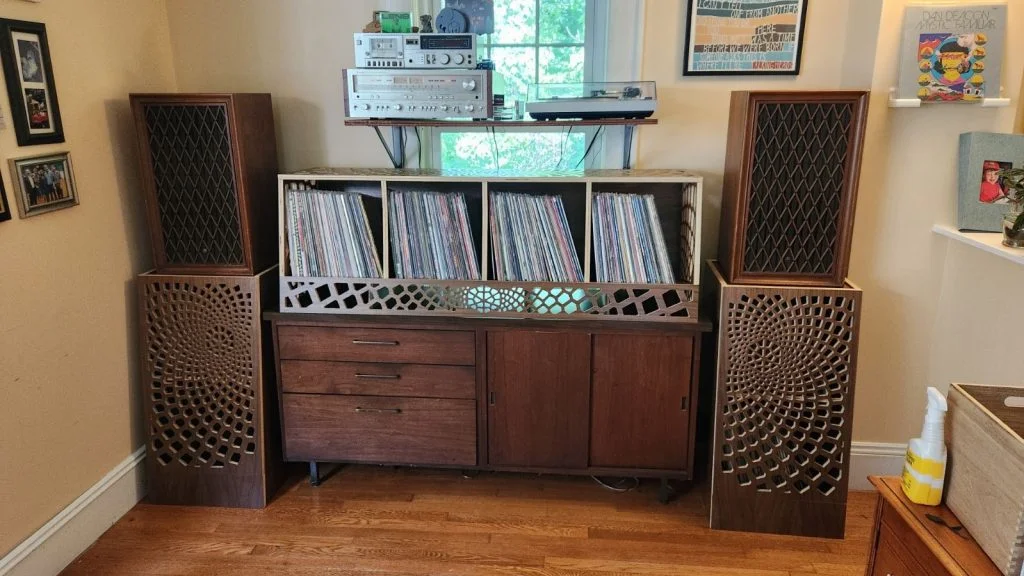
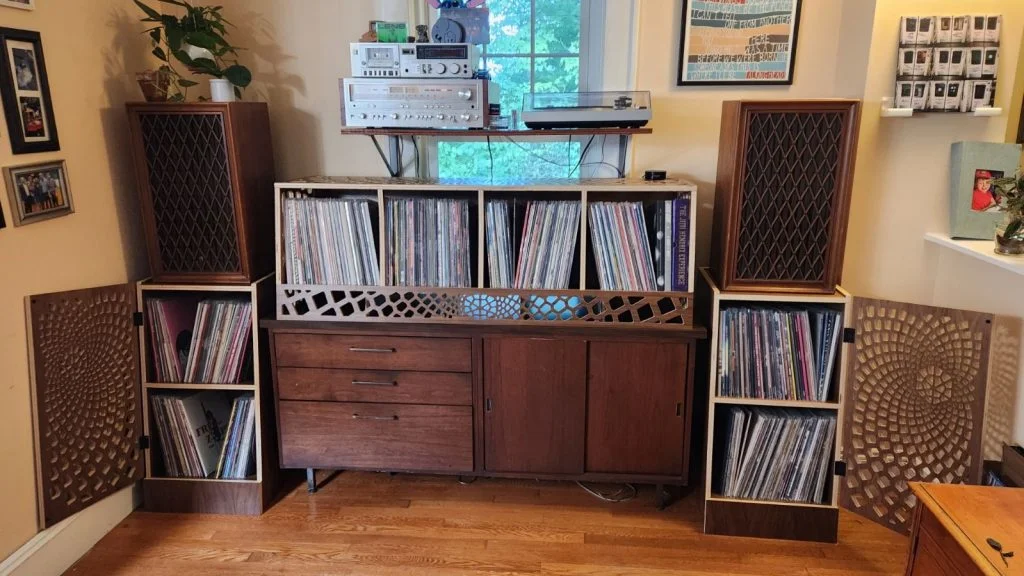
Andy, a SOLIDWORKS employee and passionate music enthusiast, has always loved blending creativity with functionality. When his growing vinyl collection needed a better home, he saw the perfect opportunity to combine his design skills with his love for music.
Teaming up with fellow SOLIDWORKS employees Sal and Chinloo Lama, hosts of the YouTube channel Our Next Make, and their Partners in Making series, Andy set out to design a custom record cabinet. He explored natural patterns, like Voronoi and Fibonacci spirals, to enhance the aesthetic, blending technical precision with nature’s beauty to create a one-of-a-kind piece.
Translating Ideas into Drawings
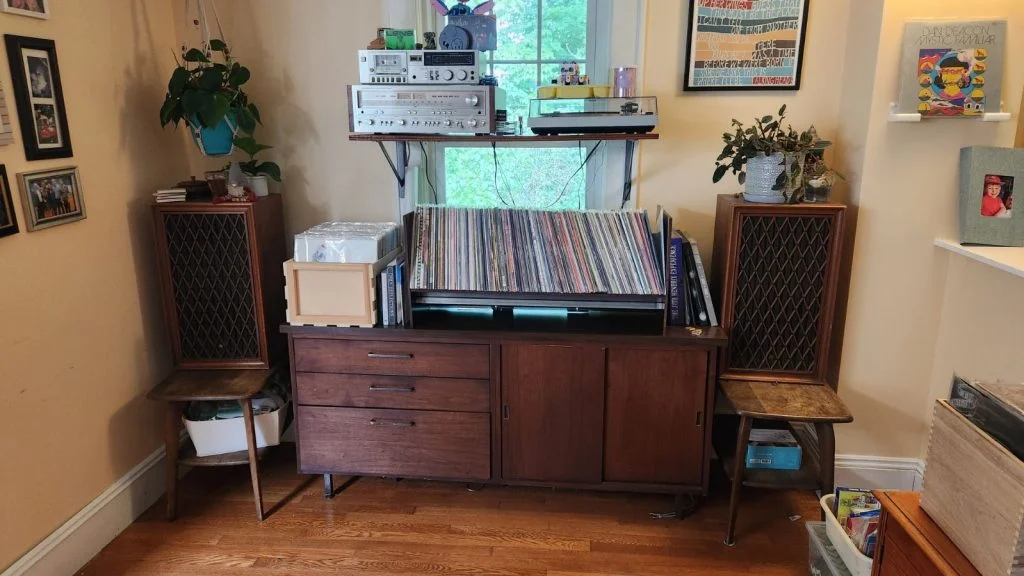
Andy used layout sketches to ensure that everything would fit in his dining room. He adjusted the design and dimensions to complement his existing cabinet and speakers. To achieve this, he utilized xGenerative Design, a tool commonly employed by architects to design complex building facades. xGen employs a distinct methodology for creating geometry, differing from traditional parametric modeling in SOLIDWORKS or xDesign. Creating this geometry manually with SOLIDWORKS or xDesign would have taken exponentially longer, not to mention updating it. By combining traditional sketches with advanced design software, Andy was able to improve both the functionality and aesthetics of the cabinet.
Voronoi and Fibonacci Patterns
One of the most exciting parts of Andy’s process was his decision to incorporate natural patterns into his design, transforming his storage solution into a piece of art. He was inspired by two mathematical concepts: Voronoi diagrams and Fibonacci spirals, which occur frequently in the natural world.
The Voronoi pattern starts with a series of points that expand into circles. As the circles grow and intersect, they form irregular cell-like shapes. This pattern is common in nature, appearing in everything from the structure of honeycombs to the arrangement of plant cells. Voronoi’s organic, almost random feel created a stunning pattern for the cabinet.
In addition to the Voronoi, Andy incorporated Fibonacci spirals into the design. The Fibonacci sequence is a famous mathematical pattern where each number is the sum of the two preceding it. This spiral can be found in sunflower seed arrangements, pinecones, and even the curve of nautilus shells. Combining these two naturally occurring patterns gave Andy’s record cabinet a unique aesthetic that felt as much a part of nature as it did modern design.
Learning Through Fabrication
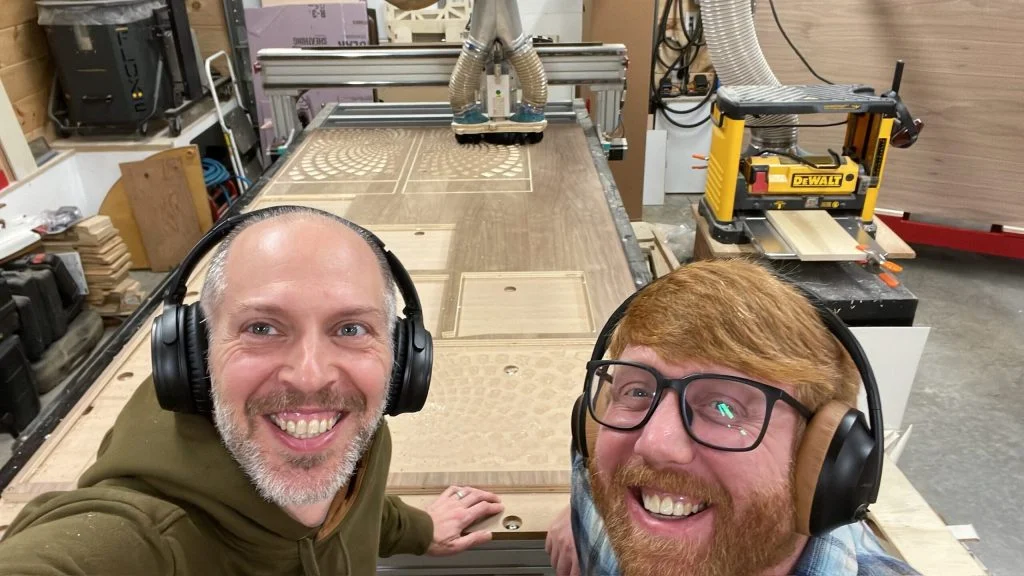
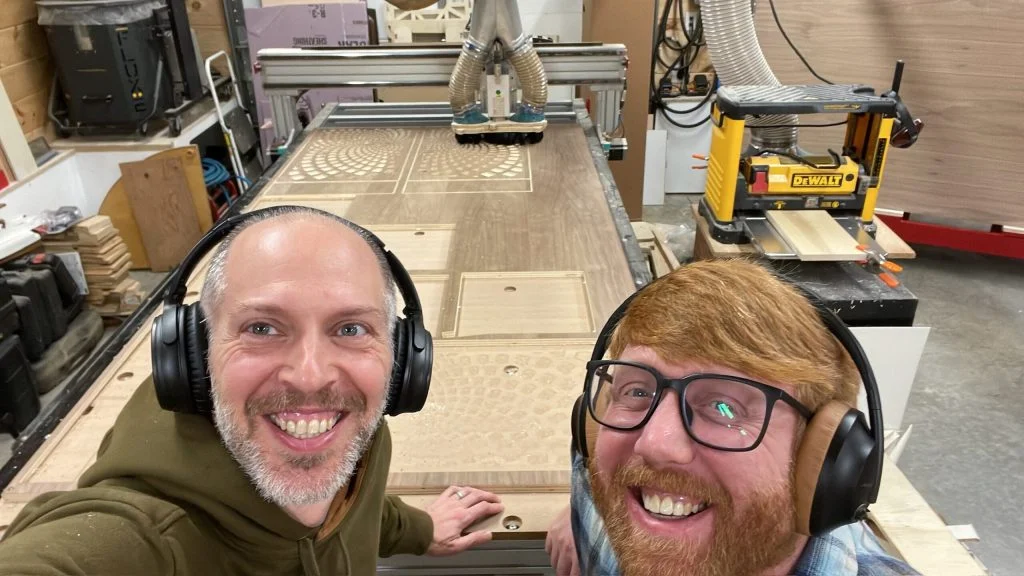
To bring the cabinet to life, Andy teamed up with Sal and Chinloo, who had the tools and expertise to help with the fabrication. The cutting and assembly happened in their workshop, using their CNC machine to carve the walnut plywood. This part of the process revealed some challenges that aren’t always obvious when working digitally, including how the wood grain would flow across the cabinet. While everything fits perfectly in the digital model, the grain direction significantly impacted the final look in the real world. Andy and the team realized that certain pieces had to be adjusted on the fly to ensure the grain lined up just right. This lesson in material behavior was a reminder that real-world fabrication often requires flexibility and problem-solving that goes beyond the initial design.
Beyond the aesthetics, there were practical challenges. Andy had to consider how the pieces would hold together and whether the structure would be strong enough. With advice from his colleague and fellow maker, Jordan Tadic, Andy made decisions about fasteners and joinery techniques.
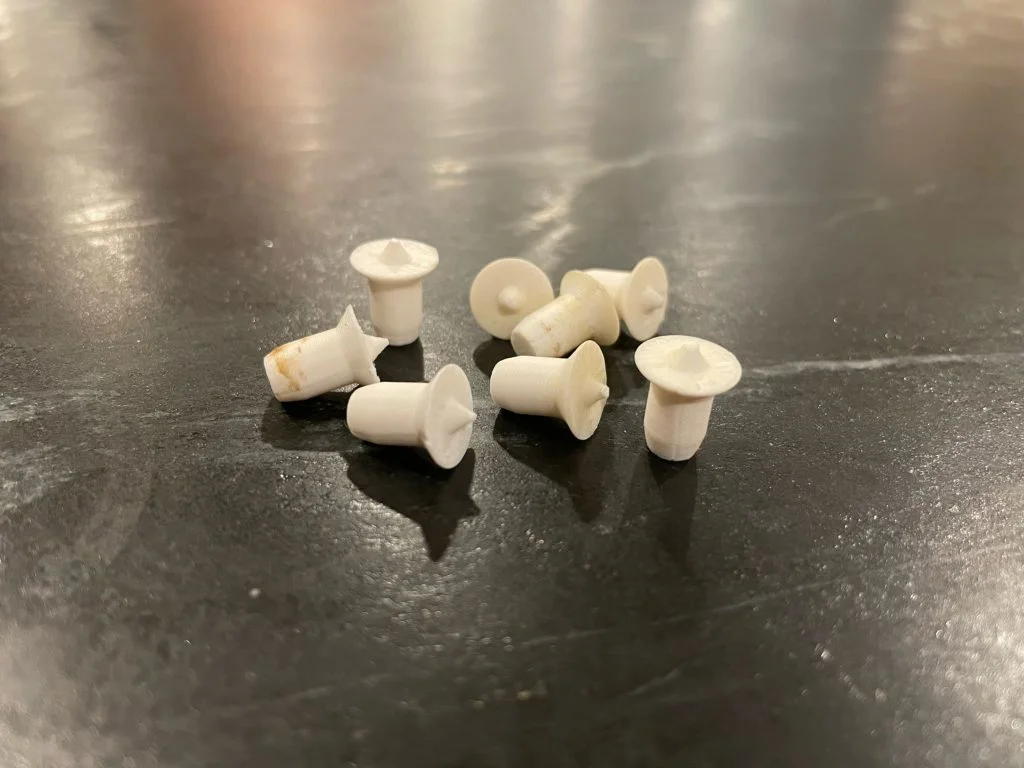
For the strongest joints, they used dado grooves, which are great for securely joining panels. They opted for pocket holes in less critical areas to keep fasteners hidden. And when it came to delicate sections like the small divider walls, dowels proved to be the best option for keeping everything secure.
Balancing Design, Engineering, and Art
One of the biggest takeaways was learning how to adapt a digital design to the real world. In CAD, fabrication seemed simple – pieces fit together perfectly, and there were no limitations on tools or materials. Once fabrication started, Andy had to rethink certain aspects, such as how small some shapes could be before the CNC router bit would no longer fit. He adjusted the design to account for the physical limitations of the tools, proving that even the most intricate digital models need practical consideration when it comes time to build.
There was also an artistic side to the project. While Andy focused on ensuring the cabinet was strong and functional, he wanted it to look beautiful. The balance between engineering and art became a key part of the process, especially regarding patterns and grain direction decisions. In craftsmanship, aesthetic choices are just as important as the technical ones.
Community at the Heart of Making
Throughout the project, Andy leaned on the support of his fellow makers. Working with Sal, Chinloo, and Jordan allowed him to tap into their collective experience and learn from their insights. Bringing a complex design from screen to reality requires more than technical skills – it takes a community. Working together helped solve problems as they arose, such as determining the best way to fasten the pieces or dealing with unexpected issues like wood grain direction. Whether sharing tips on fasteners or offering feedback on design choices, having a network of knowledgeable peers can make all the difference.
Watch the Video
You’re in luck if you want to see how Andy’s custom record cabinet came together. Sal and Chinloo captured the entire process on their YouTube channel, Our Next Make, in the latest episode of their Partners in Making series. The record cabinet video takes you through each step, from the initial design to the final assembly, and shows how natural patterns and digital tools came together to create something truly special.
Check out the full video here: Making a one-of-a-kind record cabinet and speaker stands to store over 500 vinyl records.
Ready to tackle a project of your own? At just $48 per year, SOLIDWORKS for Makers offers hobbyists access to professional-grade CAD tools, making it easier for anyone to bring their creative ideas to life.