Behind the Design: Meet the Lead Designer Behind the Smith Blade – Ben McDonnell


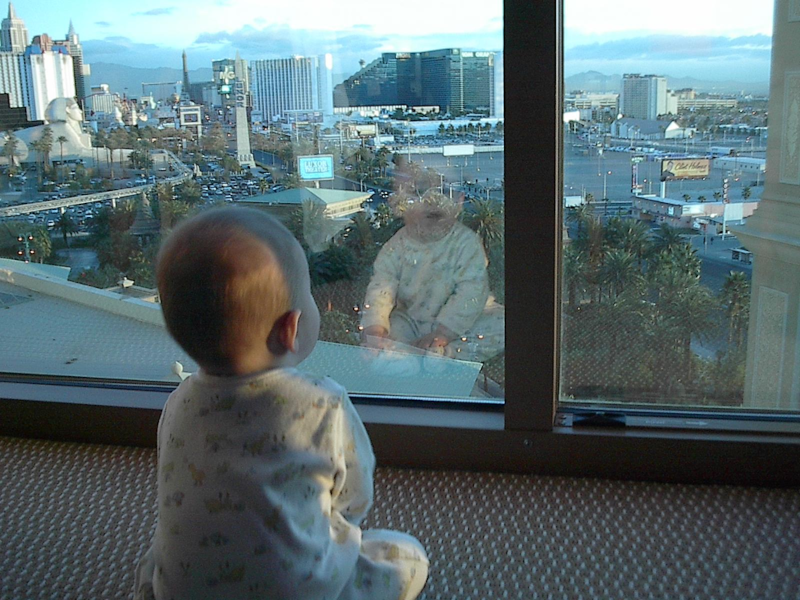
Benjamin (Ben) McDonnell was practically born with a SOLIDWORKS spoon in his mouth. He started using SOLIDWORKS at the age of three when his dad put him in front of a computer, and he tried his hand at eDrawings.
His dad, Paul McDonnell, was a CAD manager at a large engineering company in Canada, who started using SOLIDWORKS in the 90’s. Ben followed in his dad’s footsteps after taking his very own first steps. He was born in 2001, and his first version was SOLIDWORKS 2005.
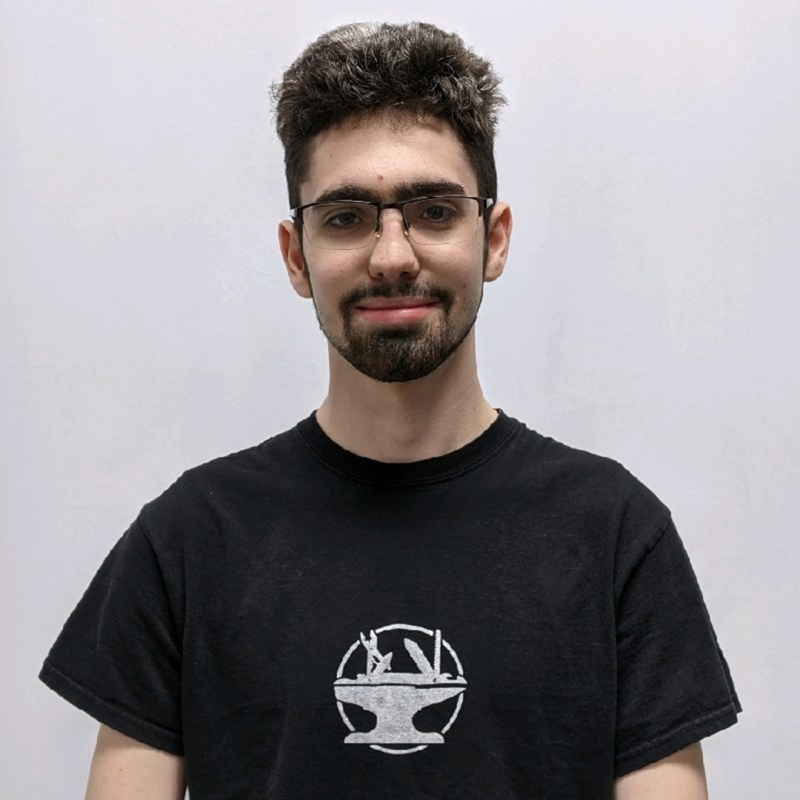
Ben, now 24 years old, was born and raised in Kitchener, Ontario, Canada. He attended McMaster University in Hamilton for automotive engineering for one year, then COVID hit, and he didn’t want to go to school online. Post-COVID, he attended a 16-month co-op (internship) at Hacksmith Industries, and he was offered a full-time job as a mechatronics engineering designer at the company where he currently works.
Hacksmith Industries is a Canadian engineering company known for its popular YouTube channel, which takes fictional ideas from comics, movies, and video games and makes real working prototypes to inspire the next generation of makers and engineers. The company was co-founded by James Hobson and Ian Hillier, also SOLIDWORKS users.
Hacksmith’s YouTube channel has more than 15 million followers, and projects include props inspired by Star Wars, such as light sabers, props from Iron Man, and Ben’s favorite is the 10-foot-tall power loader replica they made from the movie Aliens. His team designed it using SOLIDWORKS, and Ben helped with the electrical and software design. One of the first designs he was involved in at Hacksmith was a replica of the Samus arm cannon from the video game Metroid. Hacksmith was challenged by the owner of Ctrl-V, a virtual reality arcade chain in Canada, to make a real-life working replica.
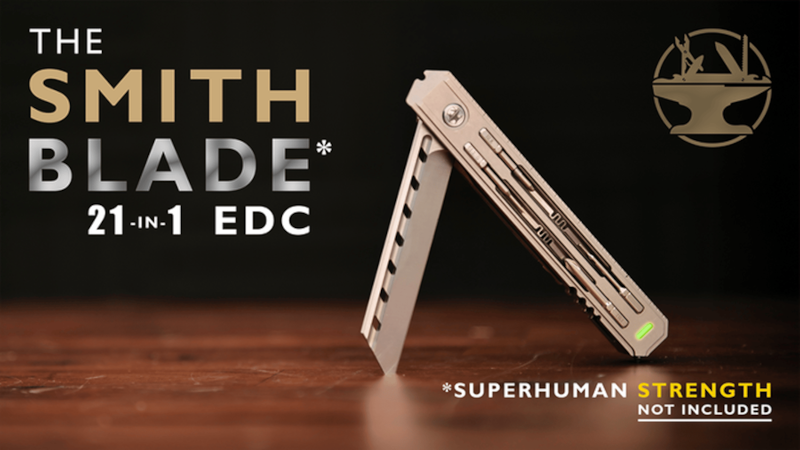
One of Ben’s latest designs is the Hacksmith Smith Blade, a multi-tool pocket knife, which is a 21st-century take on the classic pocket knife. Ben was the lead designer of the Smith Blade who designed it fully in SOLIDWORKS. He said the vision was to make a multi-tool for the next generation. “We wanted to take the concept of the Swiss Army Knife, and improve on it, bring it into the modern century, and put tools in it that are useful for somebody in our environment.”
Ben, who keeps a knife on hand himself, said he wanted to make a lightweight yet strong knife that included useful tools that you could easily carry. “What I really wanted to do was make a competent knife and then put as many other features as we could package in the tool without sacrificing the knife, unlike a Swiss Army Knife, which is great in a pinch, but small and flimsy.”
The Smith Blade is a cut above your grandfather’s Swiss Army Knife. The Smith Blade 21-in-1 Titanium Multi-Tool has a modern look with its sleek and silver design and comes in four versions, including the Lite Edition [7-in1], and is offered in multiple colors. The 21-in-1 Titanium Multi-Tool model is what they call a lightweight everyday carry (EDC) with 21 tools, including an M390 BLADE that can cut through “almost anything, even other blades,” (according to the company), and also includes a protractor, Philips 4mm bit, nail file, bottle opener, emergency glass breaker, and more.
Since launching the Smith Blade Kickstarter campaign, the company has raised $15 million (CAD), including 1000’s of pre-sales. Early-bird pricing for the Smith Blade was $320 CAD ($240 USD), which the company stated is a deal compared to most high-quality knives with M390 blades. They also offered the Lite model for $135 CAD ($99 US). Unfortunately, the knives are not available for general purchase at this time, as they are currently fulfilling orders for Kickstarter backers. They will be available in the future when production ramps up, which Ben said is in the works.
The Smith Blade is made on site at Hacksmith Industries in Cambridge, Ontario, Canada, using CNC machines. Ben said the Smith Blade project has really changed the landscape of the Hacksmith shop. “Our shop has completely transformed in the past couple of months, from a research and development prototyping shop, to now having a pretty serious production wing pumping out about 50 knives a day, that will get ramped up to ideally 400 knives per day.”
The Hacksmith engineering team used SOLIDWORKS on the 3DEXPERIENCE platform, in addition to SOLIDWORKS Simulation, and third-party CAM software for the Smith Blade design and production. Having these tools along with the CNC machines equipped them to make the knives in-house, which the company realized would be very appealing to their customers to have something made in Canada, and it was, as they have pre-sold 40,000 knives.
Ben was responsible for the design, CAM programming, and prototyping of the Smith Blade. He said SOLIDWORKS Simulation was crucial in testing the spring design in the Smith Blade to assure it could withstand being used for the life of the knife. “For some of the parts, like the really fancy spring, besides the knife and the belt clip, we had to optimize that with SOLIDWORKS Simulation just to make sure that it would survive being used, you know, 10,000-20,000 times…”
When asked what he likes about SOLIDWORKS, he said, “I guess what it comes down to is I’m really comfortable using the SOLIDWORKS environment. I can take something from my head and design it with the software, and then bring it into real life with minimal friction.”
Ben said he and most of the team are currently using SOLIDWORKS 2025, and they are in the process of moving to 2026. His design methodology varies by project. “For example, a small product, like a knife, where there’s not a ton of referenced components, is all sort of modeled on a part-by-part basis. When you’re getting into more complicated assemblies, you do more multi-body parts. You do stuff driven by a master file. It really depends on the scale of projects and what I’m working on, because sometimes it’s like a 45-component piece like this, or other times it’s our giant robots, which are tens of thousands of pieces. So, you’ve got to pick the right design methodology for the scope of parts you’re working on.”
His favorite part of working at Hacksmith is “the varied nature of the job. It’s a new challenge every day!”
Ben spends a lot of time working, whether it’s after-hours writing software to make projects flow more smoothly at work or responding to phone calls from the night shift team to help them troubleshoot.
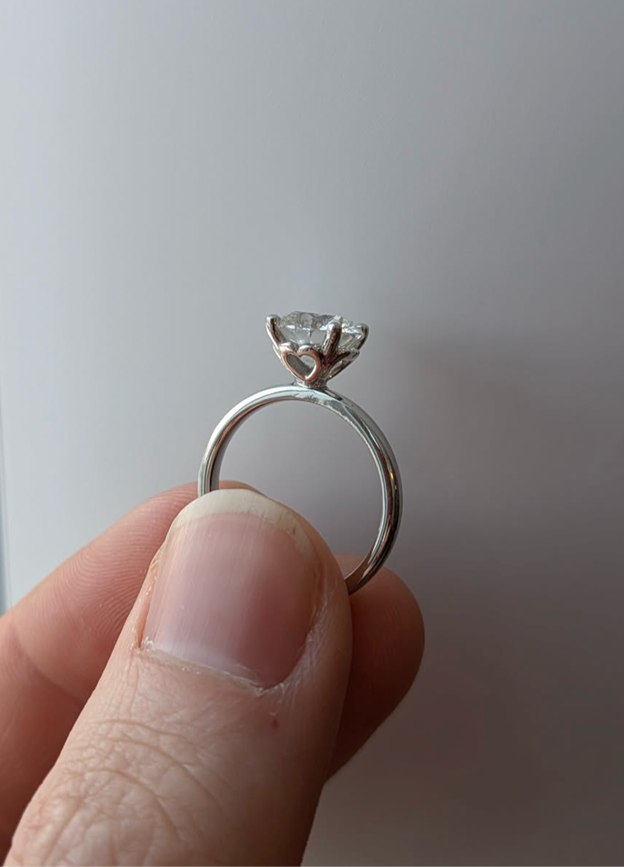
When he’s not working, he enjoys spending time with his girlfriend. He also likes 3D printing, and he’s got the battle wounds to show it. He has a scar on his hand from removing a 3D print off a build plate. These days, he uses a Bambu Lab 3D printer at home, which he said is affordable, stable, and reliable. Recently, Ben designed an engagement ring for his girlfriend in SOLIDWORKS, prototyped it with 3D printing, and had a jeweler make it. She said yes!
Other fun facts about Ben include:
- He is still interested in automotive and has a sporty red Hyundai Veloster N hatchback. He is also restoring a 73 VW Super Beetle. A few times a year, he hits the track with his sport bike.
- He is currently streaming home improvement content.
- As for music, he listens to “anything from pop to metal to electronic.”
- He has a ball python snake.
As for what’s next for Ben, he said the company is super busy “spooling up” Smith Blade production. “With all the experiences Hacksmith gives me, I am excited for it to go in whatever direction it does!”

Latest posts by Rita Stange (see all)
- Behind the Design: Meet the Lead Designer Behind the Smith Blade – Ben McDonnell - February 26, 2026
- Behind the Design: Josh Mayes Spreads the Red to Inspire Others About SOLIDWORKS Design - January 30, 2026
- Behind the Design: Meet the Man Behind the Props— Kirby Downey - January 5, 2026