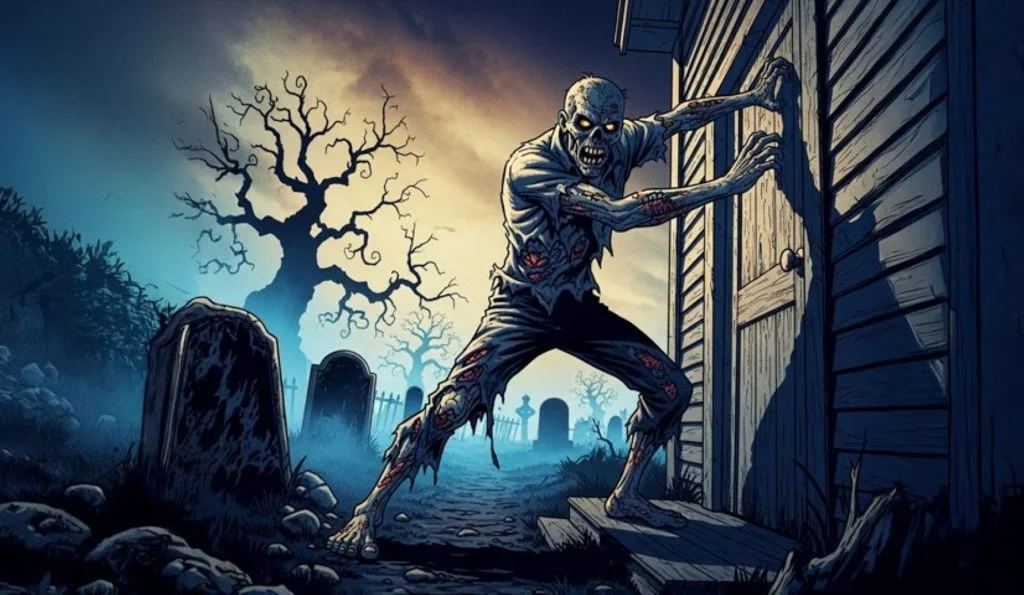
I cant believe that it was over 10 years ago I asked SOLIDWORKS Simulation question, “how much wood I would need to board up my doors and windows to save myself from a zombie horde.”
I imagined my zombie to be the classic slow moving stupid zombie barely able to say “brains.” But nothing stays the same: vampires can walk in daylight now and maybe zombies can become intelligent. But how? In the past decade we have seen the rise of AI and implantable tech, so my end of the world apocalypse has changed to AI enhanced zombies!
This begs the question: would my previous approach of boards and nails keep me safe if my house was attacked by Zombie 2.0? Let’s find out:
After a cursory look at my previous defenses, I realize that they just won’t cut it anymore. I need some serious ‘home improvements and upgraded door locks
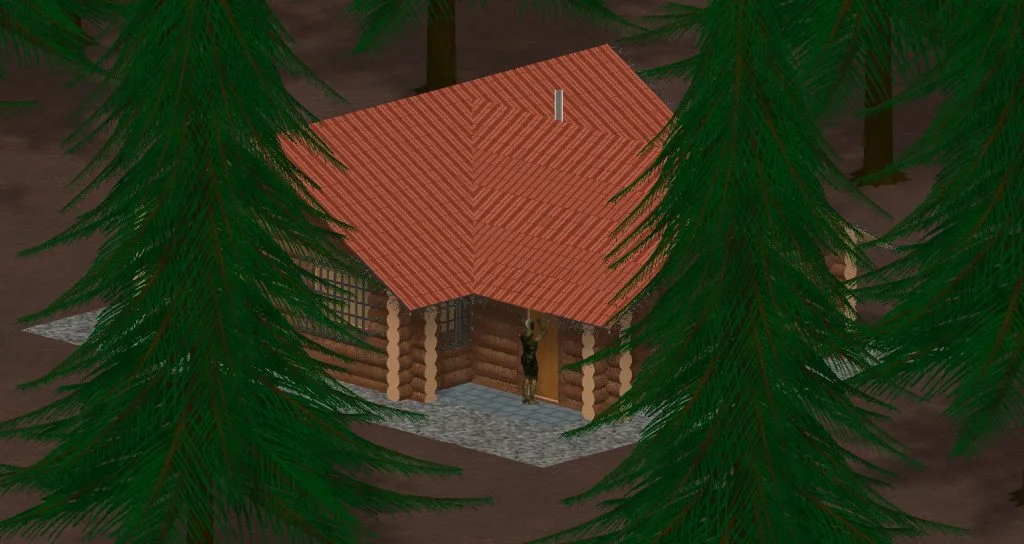
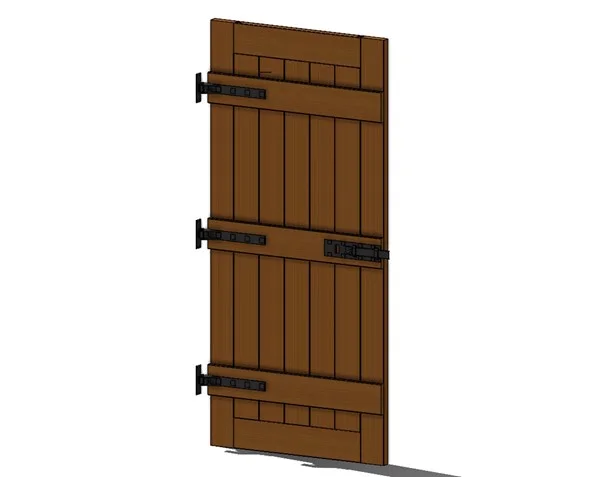
This new AI enhanced zombie hoard shifts future zombie battles from brains vs brawn to brain vs brain. Could this Zombie 2.0 find a weakness in my design? I need an edge to keep me safe.
Luckily for me SOLIDWORKS Simulation hasn’t stood still over the past decade. The incredible enhancements coupled with faster computers allows SOLIDWORKS designers and engineers to tackle ever more complex problems.
My earlier simulations concentrated on the static strength of my design. Could a zombie pull on my reinforcement and get in? SOLIDWORKS Simulation can easily solve this type of problem, and now it can go the extra step and consider the ability of my door design to withstand a charging zombie. This dynamic load ramps up the strength requirements for the door hinges and locking mechanism.
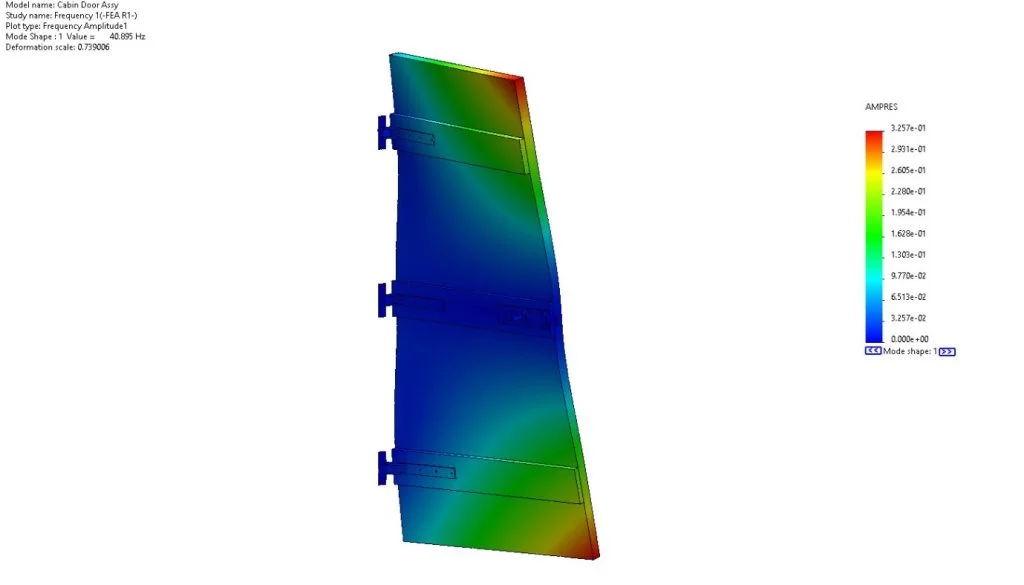
The first step in understanding my new design is to check and see if a dynamic simulation is even necessary. A quick frequency run on the door shows that its natural frequency is 41 Hz. This means that unless the zombie can hit the door 41 times a second, we can ignore the dynamic effects, as our zombie can’t take advantage of resonance effects.
Our zombie impact load can now be considered a static load, allowing for easy evaluation of the door strength. As expected, the high stresses are around the door latch.
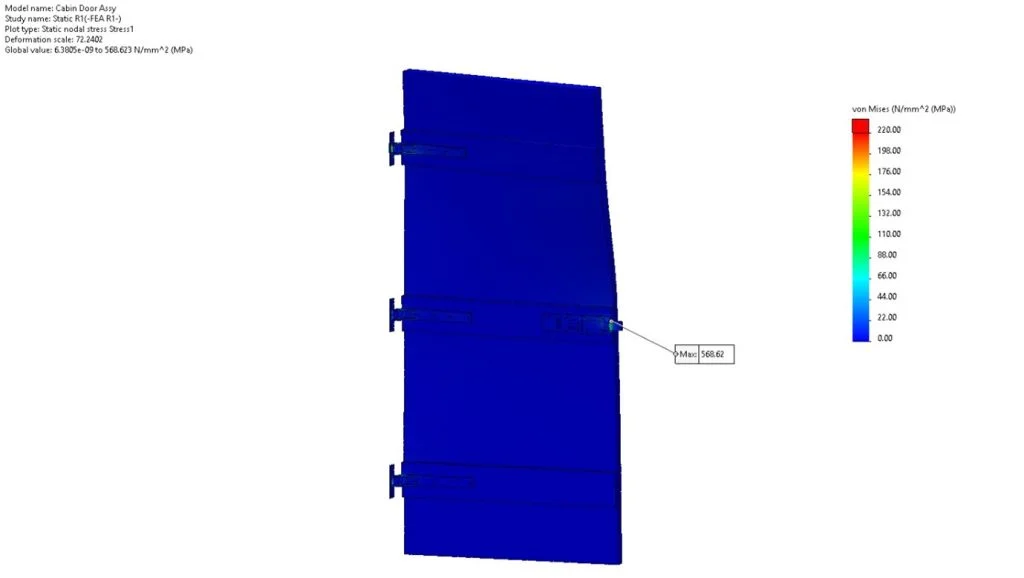
So we are safe from a single zombie impact! But what happens after repeated impacts? I know that many structural failures are caused by fatigue. It’s no good if the door fails due to repeated impacts. Once again, SOLIDWORKS Simulation is up for the task. The number of cycles or zombie impacts to fatigue failure is so high that I am confident that my brains won’t be on any zombies menu.
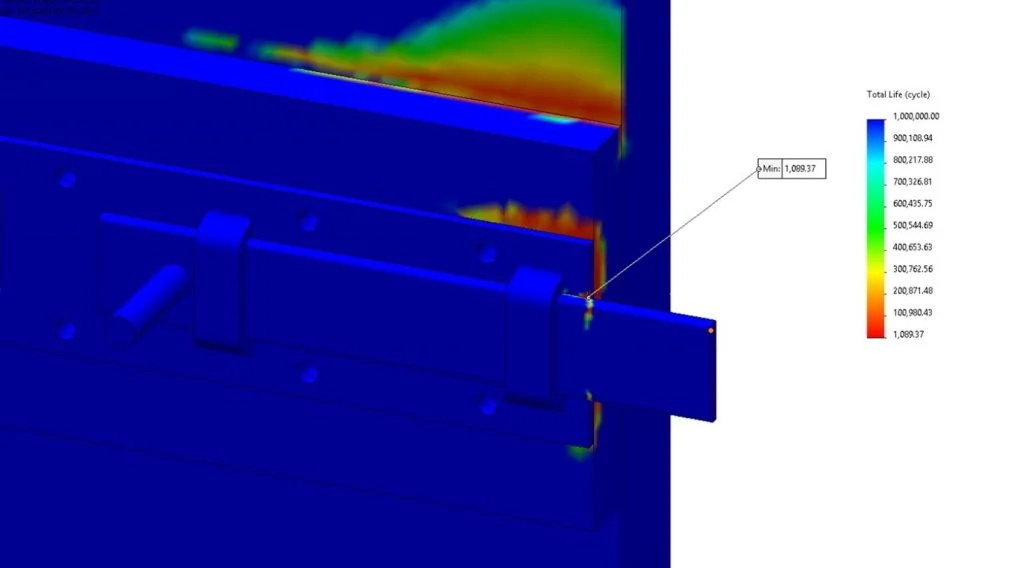
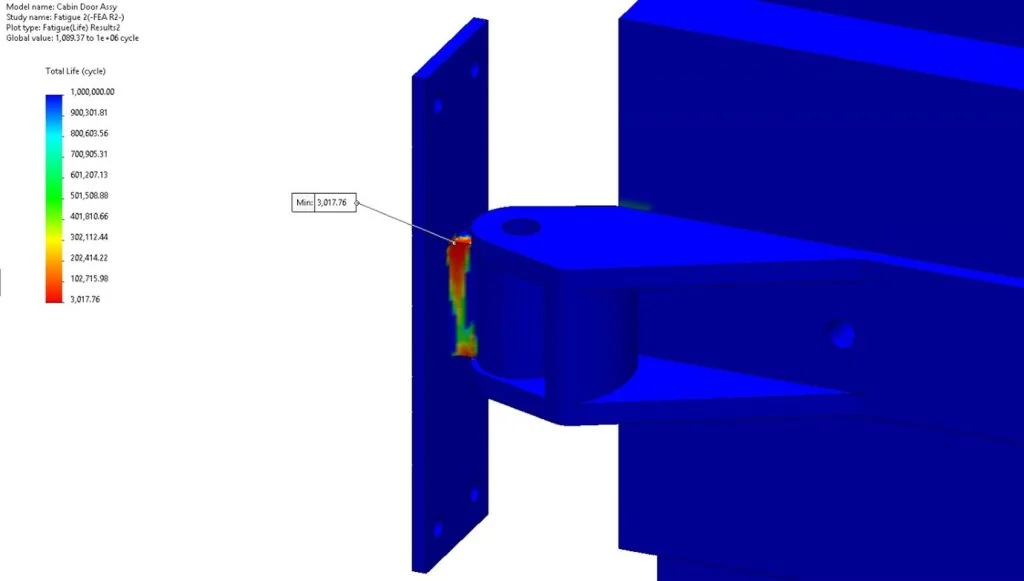
Thanks to SOLIDWORKS Simulation I can rest easy. And even if you aren’t worried about the impending zombie apocalypse, SOLIDWORKS Simulation can improve your products, strength, longevity and performance.
Learn more about SOLIDWORKS Simulation and keep your brains safe. Happy Halloween!
