

Innovation is no longer optional in today’s competitive landscape—it’s a necessity. Advanced simulation solutions are revolutionizing industries like design, engineering, and manufacturing. These tools enable organizations to develop more effective prototypes, reduce costs, and bring products to market more quickly. With the advent of cloud-based platforms and subscription models, adopting these technologies has become more practical, driving both innovation and return on investment (ROI).

Simulation—a process that uses mathematical models to replicate real-world scenarios—has evolved far beyond its original applications. Once confined to research labs and specialist fields, simulation tools are now widely accessible and adaptable across various industries. From architects testing structural integrity to manufacturers optimizing workflows, simulation enables a level of precision and efficiency previously unattainable.
Key Benefits of Advanced Simulation Tools
Enhanced Prototype Quality
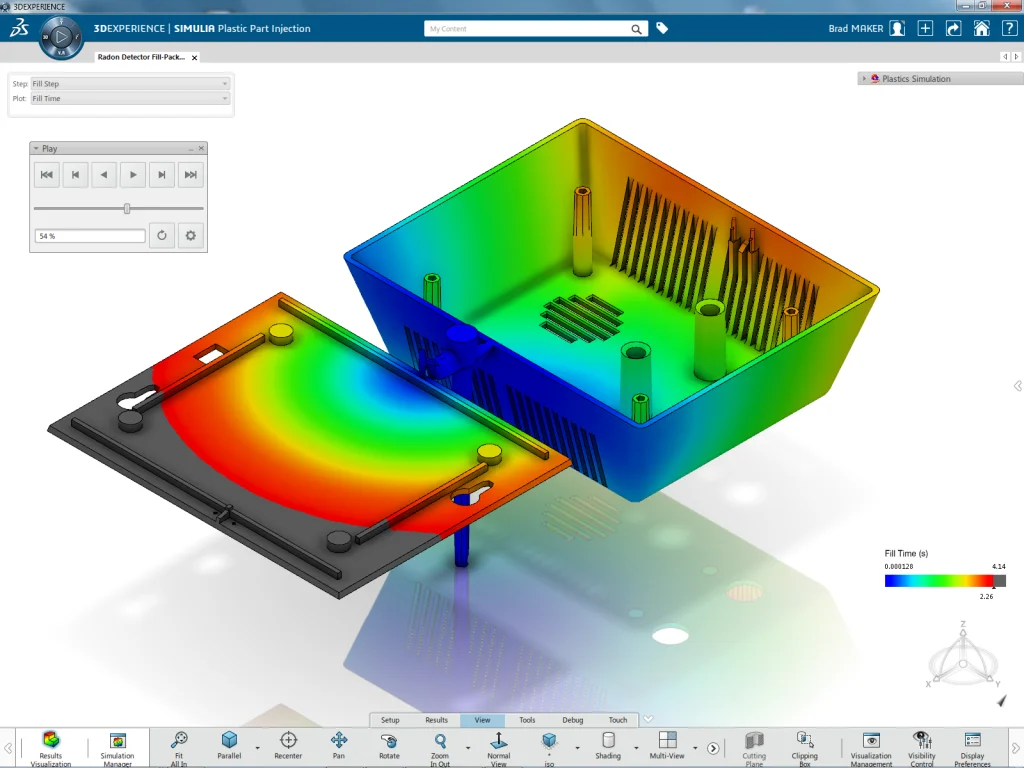
Simulation tools allow for the meticulous testing of designs before physical prototypes are created. This minimizes errors, reduces the need for multiple iterations, and ensures that the end product meets or exceeds quality expectations. For instance, product designers can simulate real-world stresses, such as temperature changes or mechanical loads, to fine-tune a product’s performance. This results in safer, more reliable, and higher-quality designs.
Reduced Costs
By identifying potential flaws in the early stages of development, simulations help prevent costly production errors. Industries reliant on high-cost materials, such as aerospace or automotive, benefit significantly from this capability. Simulation tools also reduce reliance on physical prototypes, saving on material costs, labor, and time spent in trial-and-error processes. This streamlined approach keeps projects on budget and increases profit margins.
Improved Development Timelines
Time is money, especially when delivering products to market. Simulation solutions accelerate the design process by simplifying complex calculations and automating repetitive tasks. Teams can quickly simulate multiple scenarios, identify optimal solutions, and move forward with confidence. Faster turnaround times not only improve productivity but also grant companies a competitive edge by capitalizing on market opportunities before competitors.
The Shift to Cloud-Based Solutions
The growing adoption of cloud computing has transformed simulation technologies. Traditionally, simulations required on-premise infrastructure—a significant investment in hardware and software. However, with cloud-based platforms, simulation tools are now more scalable, cost-effective, and accessible.
Flexibility and Scalability
Cloud-based systems enable teams to scale resources according to project demands. Whether running a single simulation or hundreds, these platforms ensure you have the computational power needed without investing in high-cost equipment.
Global Collaboration
The cloud facilitates seamless collaboration across geographically distributed teams. Engineers, designers, and stakeholders can access the same simulation data in real time, ensuring alignment and reducing communication delays.
Lower Barrier to Entry
Subscription models have replaced large upfront investments with predictable, scalable costs. Small and medium-sized enterprises (SMEs) can now leverage the same powerful simulation tools as industry leaders, leveling the playing field and fostering innovation.
Driving ROI and Innovation
Investing in simulation solutions delivers measurable value across multiple dimensions:
Accelerated ROI
Faster development cycles and reduced prototype costs translate directly into improved ROI. Companies can reinvest savings into further innovation, fueling long-term growth.
Data-Driven Decision-Making
Simulations generate valuable data insights, enabling companies to make informed decisions. This reduces the risks of costly missteps and ensures that resources are allocated efficiently.
Encouraging Experimentation
By lowering the cost and time associated with testing ideas, simulation tools empower teams to experiment boldly. This results in groundbreaking innovations that push industries forward.
Sustainability Gains
Simulation also supports sustainable practices. By optimizing designs, materials, and workflows, companies can reduce waste and minimize their environmental impact.
The Future of Simulation Lies in Innovation
The simulation landscape continues to evolve as technologies like artificial intelligence (AI), machine learning (ML), and the Internet of Things (IoT) become integrated into these platforms. These advancements promise even greater predictive accuracy and the ability to simulate increasingly complex systems in real-time.
For example, AI-powered algorithms can automatically refine simulations, reducing the time required to identify optimal solutions. Meanwhile, IoT sensors can feed real-world data into models, creating hyper-accurate simulations that reflect dynamic, real-time conditions.
This convergence of technologies positions simulation tools not just as problem-solvers but as essential drivers of strategy and innovation.
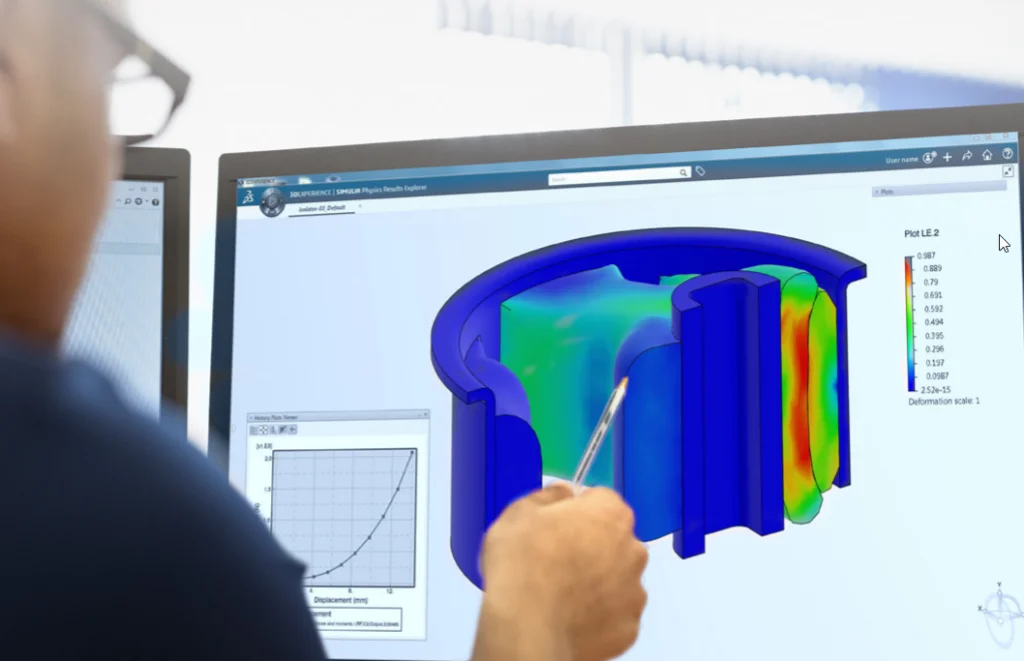
The need for innovative, efficient, and cost-effective operations has never been greater. Simulation solutions provide the tools necessary to meet these demands, while empowering teams to explore new possibilities. Whether you’re looking to improve product quality, expedite development timelines, or optimize costs, simulation solutions offer a proven pathway to success.
Download the eBook to explore the power of simulation and unlock your organization’s potential to lead in an era defined by innovation. The future is predictive, collaborative, and optimized—will you leap?