

Why 52% of Manufacturers Miss Launch Dates and How PLM Fixes It
More than half of manufacturers miss their product launch dates. That single statistic, drawn from new Tech-Clarity research surveying 298 companies, should concern every engineering leader responsible for time-to-market, quality and innovation.
Missed dates aren’t isolated setbacks. They trigger a chain reaction: lost market windows, delayed follow-on projects and competitors who launch first and capture your share. If your teams struggle with late design changes, endless rework or slow cross-functional handoffs, the research offers both an explanation and a way forward.
In this post, we’ll break down the biggest inefficiencies slowing new product development (NPD), show how product lifecycle management (PLM) delivers measurable results and reveal what top-performing manufacturers do differently. Ready to see the full data? You can download the complete eBook, Achieving a Competitive Edge in New Product Development.

New Product Development Challenges Impact Business
A company’s success depends on bringing innovative products to market on time, on budget and at the right quality. The Tech-Clarity survey identified the three biggest drivers of competitive advantage: product quality, product innovation and faster product development.
Yet manufacturers keep falling short. The research found that product development challenges directly damage business performance:
- 52% miss launch dates
- 49% face higher development costs
- 47% have less time to iterate and innovate
- 41% report product quality issues
These aren’t operational annoyances. They erode revenue, profitability and long-term competitiveness. When your engineers spend their days fighting fires, they can’t design better products.
Where Your Engineers Are Losing Time
The survey investigated why teams miss their dates. The causes are familiar to any engineering leader, and they compound one another.
Late Design Changes
Well over half of respondents (56%) cite late-stage design changes as a reason for missed dates. These late changes usually signal deeper collaboration problems, especially between engineering and manufacturing. When manufacturing isn’t involved early, design decisions overlook production needs, forcing costly rework after handoff.
Wasted Time on Non-Value-Added Tasks
Nearly half of the respondents lose time to work that adds no value. Engineers report that errors from outdated information (55%), searching for data (48%) and inefficient collaboration (44%) eat into design time. Every hour spent hunting for the right file is an hour not spent innovating.
Working With Outdated or Incorrect Data
Over 40% point to outdated information and rework from incorrect bills of materials (BOMs) as major sources of delay. An inaccurate BOM drives poor design decisions and quality issues that often surface only in manufacturing, causing even greater disruption.
Poor Project Visibility
Nearly half of organizations struggle with poor visibility into project status. Because collecting updates takes time, the data is often outdated by the time managers review it. This leads to lagging decisions and risks caught too late to fix.
How PLM Delivers Measurable Results
The research shows that manufacturers with PLM in place report improvements that map directly to these challenges.
Companies with PLM report significant business gains:
- 56% faster product development
- 51% greater product quality
- 49% greater organizational agility
- 44% higher product innovation
- 36% reduced compliance risk
The operational improvements explain why. PLM users report more current and accurate product data (61%), accurate BOMs (58%), faster engineering change cycles (51%) and more efficient design-to-manufacturing handoffs (50%). When engineers stop wasting time on rework and searching, they run more design iterations and hit quality targets.
The takeaway is clear: PLM isn’t just an operational tool. It’s a strategic platform that improves competitiveness, profitability and long-term performance.
What Top Performers Do Differently
The most valuable insight in the research comes from benchmarking. Tech-Clarity identified the top 28% of companies as Top Performers based on time-to-market, quality, innovation and compliance. Then they examined what set these leaders apart.
They Integrate PLM With Data Management
Most manufacturers already have design data management: over 90% run at least one product data management system. That baseline alone won’t put you ahead. Among companies with both systems, Top Performers are 27% more likely to have PLM integrated with product data management than to run standalone tools.
They Build a Digital Thread
Top Performers connect engineering and manufacturing through a common system. They’re 35% more likely to manage the manufacturing BOM (MBOM) in PLM, creating a digital thread that spans the product lifecycle. The result: fewer handoff errors, better change management and tighter alignment between design and production.
They Streamline Processes Digitally
The leaders also work smarter across the board. Top Performers are:
- 18% more likely to manage design changes with digital workflows
- 61% more likely to maintain comprehensive raw material information in the BOM
- 26% more likely to readily trace product design history in their systems
That design history matters beyond compliance. It captures why a change was made, helping engineers make informed decisions and preserving knowledge for new hires.
The Case for Cloud PLM and Integrated Project Management
Two findings deserve special attention from any leader weighing a technology investment.
Cloud PLM removes the usual barriers. Cloud users report easy access to product data (62%), the ability to work anytime from anywhere (59%) and improved cross-functional collaboration (56%). Just as important, they report less IT administration (48%) and less software maintenance (46%). For teams short on IT resources, the cloud delivers value faster and scales with your business.
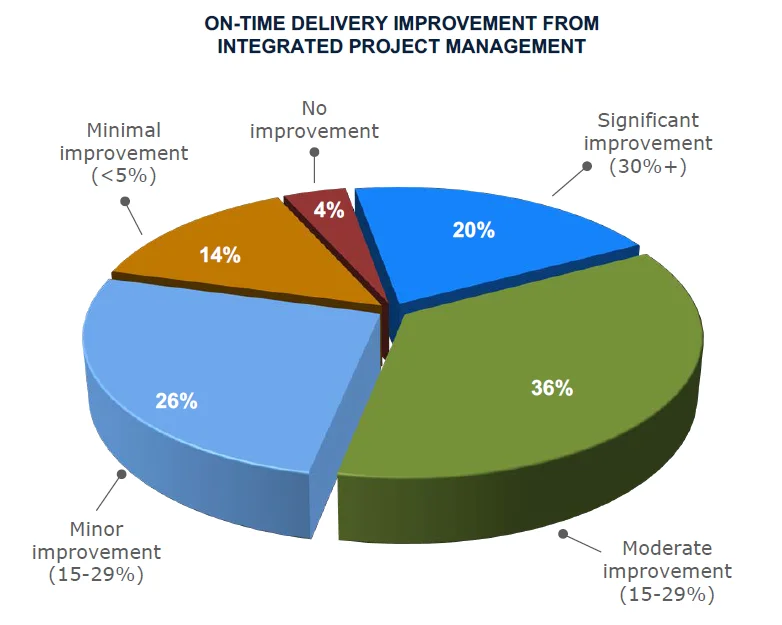
Integrated project management improves on-time delivery. General-purpose tools like spreadsheets or standalone project software lack the capabilities NPD demands. An integrated solution links CAD data and engineering activities directly to the project. The payoff is real: over 50% of manufacturers with an integrated solution reported significant or moderate improvement in on-time delivery.
Gain Your Competitive Edge
The evidence points in one direction. Inefficiencies in product development undermine your ability to compete, and the longer they go unaddressed, the more your performance suffers. The manufacturers pulling ahead aren’t simply working harder. They’ve built connected, data-driven processes with PLM at the center.
If you’re responsible for reducing time-to-market, improving quality or driving innovation across your teams, this research gives you the data to make the case and the roadmap to act on it.
Download Achieving a Competitive Edge in New Product Development now.