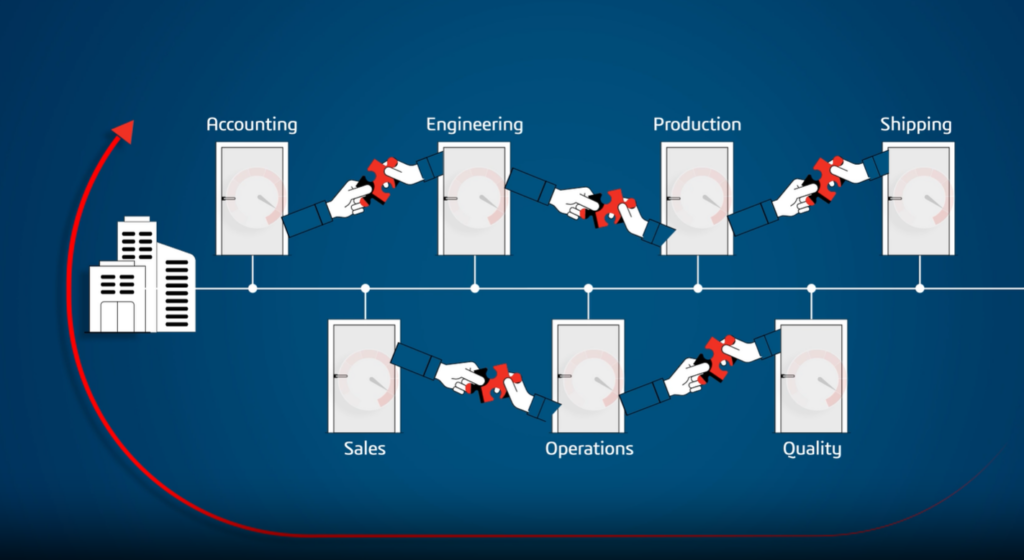

Product development today is a challenging endeavor. Global unrest, disrupted supply chains, shortages of skilled talent, and numerous other factors are making the development of new products challenging. Despite modern complexities, the foundational model of a business is fairly straightforward: you invest resources to produce a product or service, which in turn generates profit. This linear process works well in the early stages, but as an organization expands, complexity grows.
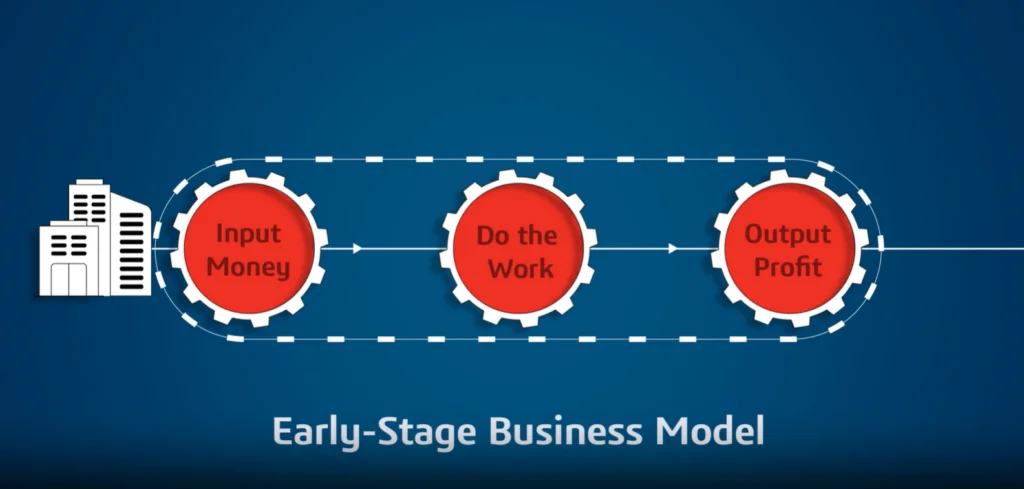
Within organizations, specialized departments form, specialized tools are adopted, and the straightforward path from input to output becomes fragmented. While individual teams may achieve high levels of efficiency, the gaps between them can lead to significant delays and errors. This is where a unified business platform becomes a strategic necessity, transforming disconnected processes into a cohesive, high-performance operation.
This post will explore how a true business platform moves beyond isolated improvements to foster company-wide efficiency. We will examine how connecting departments, aligning data, and streamlining workflows can compress your business cycle, reduce costly rework, and ultimately enhance customer satisfaction.
Moving Beyond Departmental Silos
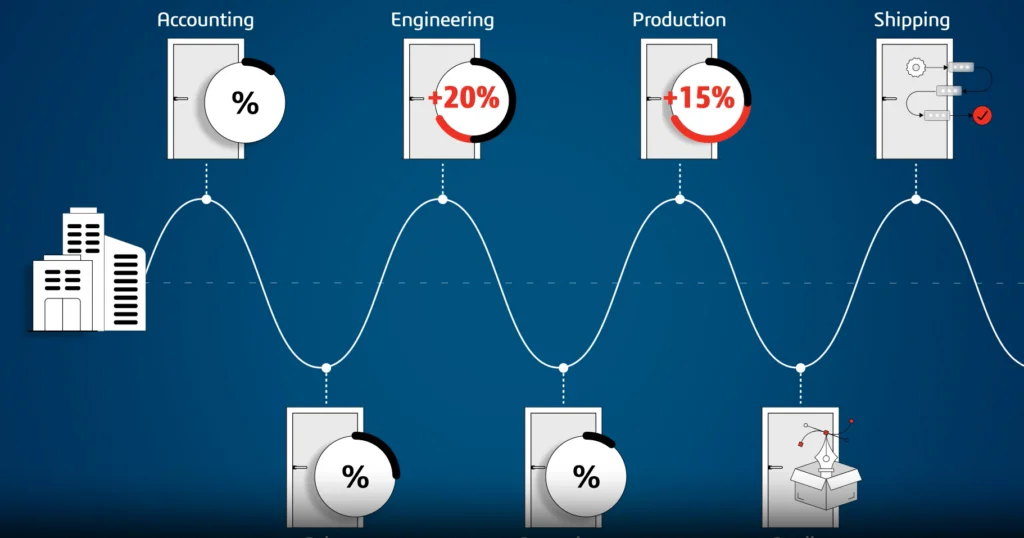
Continuous improvement is a core goal for any growing company, and is often implemented at the departmental level. The engineering team might adopt new CAD software to boost design efficiency by 20%. The manufacturing division could implement Six Sigma principles to increase productivity by 15%. Separately, the quality assurance, logistics, and shipping departments all introduce their own tools and optimize their specific workflows.
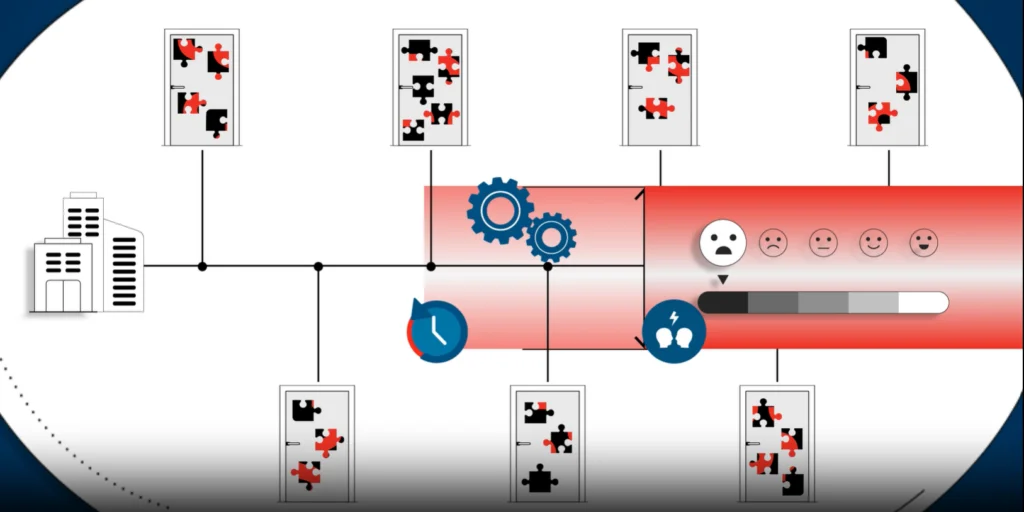
These are positive developments, but they frequently occur in isolation. Each department operates within its own system, using tools that are not designed to communicate with one another. This creates operational silos where data and information struggle to cross boundaries. The result is a collection of highly efficient islands, separated by inefficiency. The real challenge is not making each department faster, but making the handoffs between them seamless and reliable.
The Problem with Disconnected Data
When information fails to flow smoothly, significant problems arise. Engineers may finalize a bill of materials (BOM) in their design software, only for it to be manually re-entered into an Excel spreadsheet and then again into the company’s ERP system. Each manual transfer introduces a risk of human error, leading to incorrect orders, production delays, and wasted resources.
These data gaps create friction that slows the entire business cycle. Common symptoms include:
- Costly Rework: Teams are forced to redo tasks because they received outdated or inaccurate information from another department.
- Time Delays: Projects stall while waiting for data to be manually transferred, verified, and reformatted for a different system.
- Lack of Trust in Data: When information is inconsistent across departments, teams lose confidence in the data they rely on to make critical decisions.
- Poor Communication: Misunderstandings and misalignments become common when teams are not working from a single, shared source of information.
These inefficiencies are not always easy to measure, but they accumulate quickly. They directly impact production costs, delivery timelines, and the ability to satisfy customer expectations.
What Is a True Business Platform?
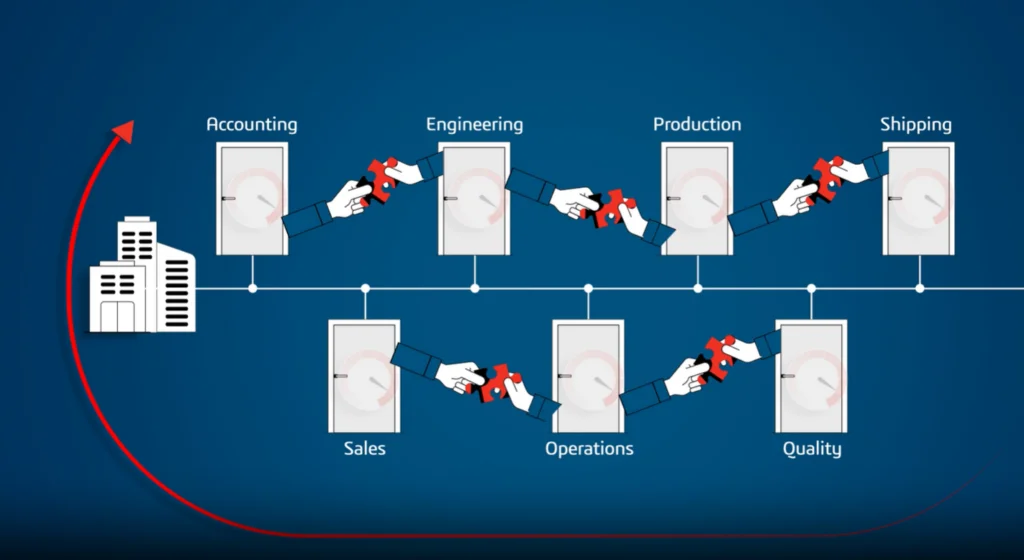
A platform is not simply another tool for a single department. A true business platform is a company-wide solution designed to connect every function of the organization. It acts as the central nervous system, allowing data to flow unimpeded from engineering and operations to manufacturing, quality control, logistics, and finance. It creates a single source of truth that every team can access and trust.
By integrating disparate systems and automating information flow, a platform eliminates manual handoffs that create bottlenecks. When a design is updated in the CAD system, the BOM is automatically updated in the ERP, and the manufacturing team has immediate access to the correct specifications. This level of integration ensures that everyone is working with the most current and accurate information.
Compressing the Business Cycle for Higher Profitability
Returning to the original business model of input, work, and profit, a platform’s primary function is to compress the time and resources required to move from input to profitable output. It achieves this by systematically eliminating inefficiencies across departments. The sine wave of operational fluctuations—caused by delays, rework, and miscommunication—is flattened into a predictable, streamlined process.
This shift represents a new level of continuous improvement. Instead of focusing solely on improving individual departments, the focus expands to reducing friction between them. By connecting the dots across the entire business, a platform creates a repeatable, reliable, and efficient process that consistently leads to profit. This holistic approach ensures that improvements in one area do not create new problems in another.
Building a Connected and Efficient Future
In a competitive market, organizational efficiency is a key differentiator. While optimizing individual departments is a valuable first step, true operational excellence is achieved when the entire business functions as a single, cohesive unit. A unified business platform provides the foundation for this transformation. It breaks down silos, aligns data, and automates workflows to create a seamless flow of information from concept to delivery.
By shrinking the gaps between departments, a platform builds a system that supports sustainable growth, innovation, and genuine continuous improvement across the board. It turns a business vision into a practical reality, creating a profitable operation that works not just department by department, but as an integrated whole.
The 3DEXPERIENCE platform is the only business development platform purpose-built for product development. To learn more about how a platform can transform your business into a connected, efficient, and repeatable process, contact your local reseller.
Watch the full video, The Value of a Platform: Unifying Your Business, below.
Ready to take your first step onto the product development platform of the future?
Are you interested in hearing more about how the 3DEXPERIENCE platform can help your business? Or how can it help you do your job better and faster? If so, stay tuned for a new blog series called “A Day in the Life on the Platform” starting Monday! You can also click on the banner below to download the white paper to learn more.