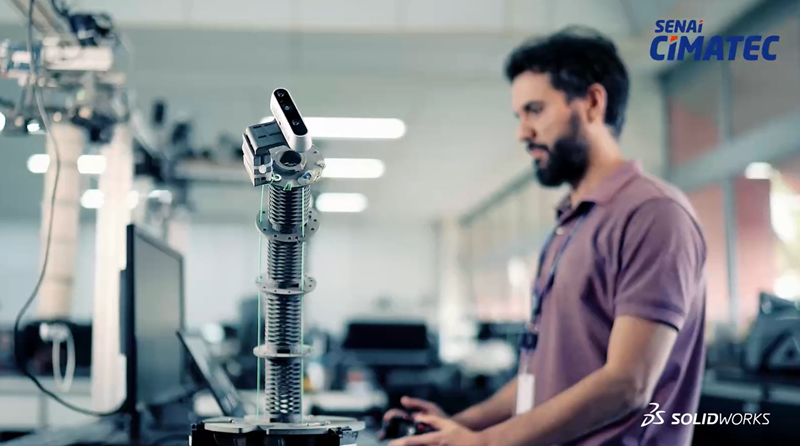

Engineering students often have limited opportunities to apply what they learn to real-world projects. SENAI CIMATEC is changing that by combining technical education, university programs, applied research, and engineering at its campus in Salvador, Brazil. The institution was founded in 2002, and today its 1,700+ engineering and design professionals work across 44 areas of expertise supporting education, science, technology, and innovation.
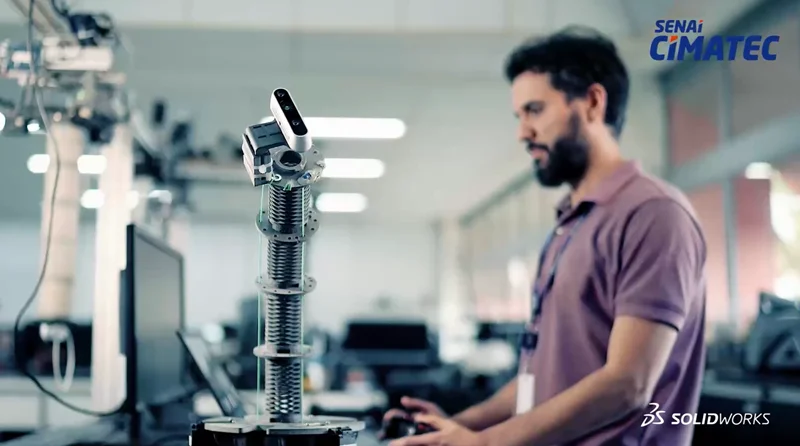
SENAI CIMATEC’s integrated structure gives students access to applied work before they enter the industry. Students can begin working on projects at SENAI CIMATEC and, after graduation, become employees of the companies involved, a direct path for skilled, knowledgeable talent to move into industry.
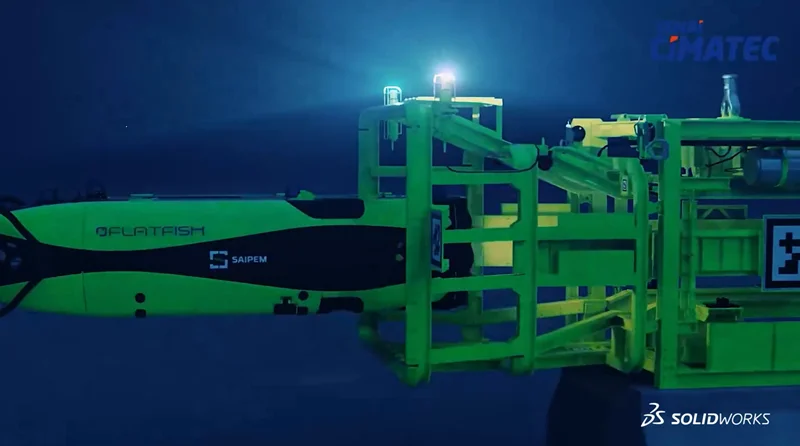
The company’s projects carry clear execution requirements across levels of technological maturity, from early research through proofs of concept, minimum viable products, and technology applications. One example is an On-Demand Ocean Bottom Node project that involves equipment for monitoring oil and gas reservoirs.
Delivering What Industry Funds
The central challenge is not simply generating ideas. It is converting funded research into a finished result that addresses an industrial need. SENAI CIMATEC also integrates multiple specialties within one organization rather than dividing development among separate institutions, so coordinated execution is vital.
According to Technical Lead and Professor Valter Beal, “When a company funds our research and asks us to develop something, it is extremely important that we deliver the final result. Having the right tools is essential, and SOLIDWORKS® helps us successfully deliver projects to our clients.”
A Common Mechanical Design Language
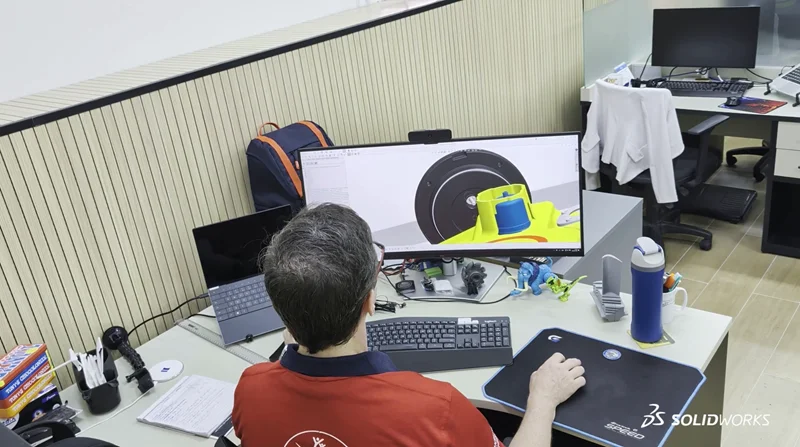
SENAI CIMATEC uses SOLIDWORKS Design across several mechanical design and development workflows. “SOLIDWORKS is the backbone of our mechanical design work: it’s our common language. We use it for simulation, sheet metal design, structural design, plastic-part design, and additive manufacturing.” Beal emphasizes. SOLIDWORKS provides students, researchers, and technical teams with a shared environment for bringing industry projects from digital design to physical production.
Using the same SOLIDWORKS integrated environment supports SENAI CIMATEC’s own integrated operating model. Teachers, employees, and students across different disciplines can contribute to a single project while the broader organization works to optimize resources and facilitate communication among the parties involved.
Building Skills While Advancing Projects
The benefits of SOLIDWORKS extend beyond completing individual projects. Because SOLIDWORKS is used in both engineering education and applied development, students can build software and mechanical design skills in the same environment used in industry. “The software is intuitive, notes Beal. “When you have a tool that is easy to learn and allows users to continue developing their skills, it makes the entire process easier.”
Because SENAI CIMATEC is a complex ecosystem that combines a technical school, university, R&D, and innovation centers, its work can support the establishment of an industrial manufacturing operation at a project location, creating jobs for the people who will produce the parts.
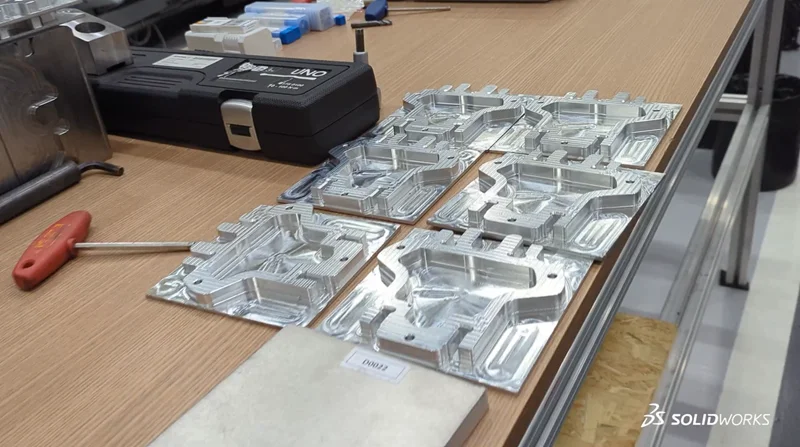
“We have several examples of students who began at SENAI CIMATEC in technical school and learned SOLIDWORKS during their training. They later enrolled in mechanical engineering and eventually became employees of SENAI CIMATEC,” Beal explains.
From the Classroom to the Factory Floor
SENAI CIMATEC’s model links engineering education, applied research, mechanical design, and manufacturing development. SOLIDWORKS provides a common design language that helps students and professionals build skills, coordinate design work, and deliver projects.
The result is a practical path from classroom instruction to industry careers. To learn how SOLIDWORKS can support your next engineering project, contact your local reseller. To watch the SENAI CIMATEC-video, click here.