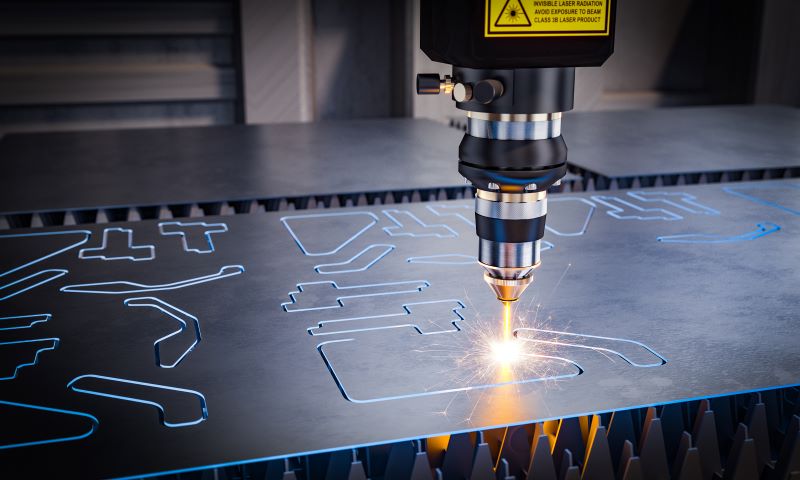

Many manufacturers still rely on manual nesting to prepare their cutting operations. This approach often seems manageable until production quantities suddenly change. When variables shift, manual nesting becomes a major time sink, delaying production schedules.
Let’s take a step back first. Nesting is an advanced capability of some CAM systems that enables manufacturers to:
- Maximize material use by automatically arranging and optimizing parts closely on material sheets
- Cut costs and save valuable time to market
- Reduce waste and shorten production time
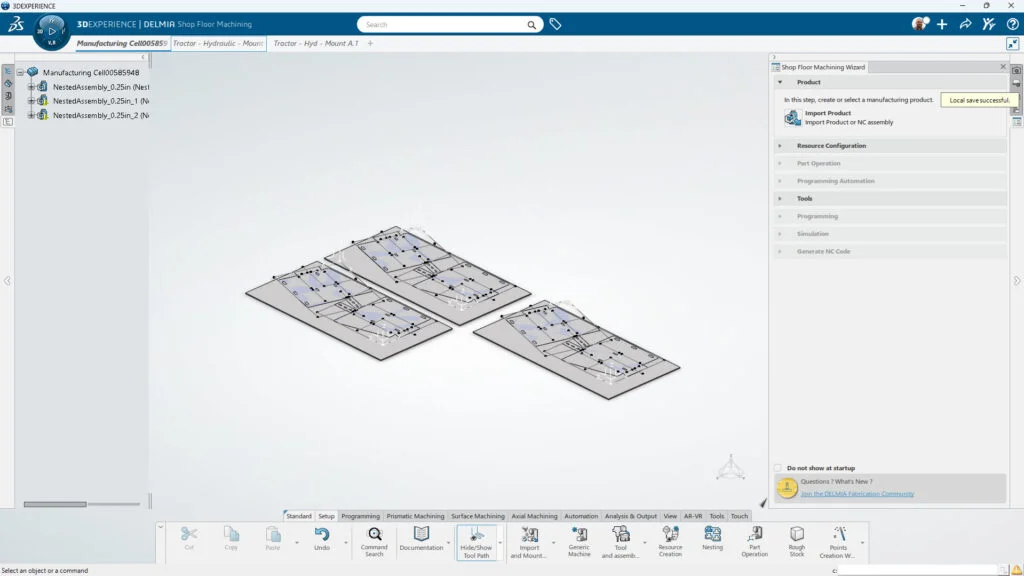
Modern nesting applications built directly into numerical control programming environments solve this fundamental problem. Automated nesting eliminates the guesswork and repetition associated with preparing sheets for production. This post, based on an on-demand 3DEXPERIENCE World 2026 session titled “Reduce Time and Waste with Nesting,” explores the core features of nesting in Shop Floor Programmer, now included in all new licenses of SOLIDWORKS CAD.
You will learn about its practical applications across various cutting machines and how it improves overall shop-floor efficiency.
The Inefficiencies Of Manual Nesting
Manual nesting requires significant human effort. Machine operators spend hours positioning individual components to minimize material waste. If a customer requests a quantity change or adds a new component to the assembly, the operator must restart the entire layout process.
This manual method introduces human error and slows production. A human operator cannot calculate the mathematical optimum for complex geometries as quickly as a dedicated algorithm. Automated nesting software eliminates this operational bottleneck. It recalculates optimal layouts in seconds, allowing your team to focus on higher-value tasks.
Umair Yusufi, lead Industrial Designer at Highland Vans, explains how Shop Floor Programmer helps the company be more efficient, while also increasing turnaround times on part production. You can read that full case study here.
“Shop Floor Programmer has improved the way we nest files and produce parts. It has enhanced turnaround times and reduced errors, because now we cannot only nest, but also efficiently make changes before cutting.”
Key Features Of Modern Nesting Software
Advanced nesting applications provide a suite of tools designed to maximize material yield and reduce machine run times. These features transform a CAD assembly into a highly optimized machine program.
Material Recognition And Thickness Grouping
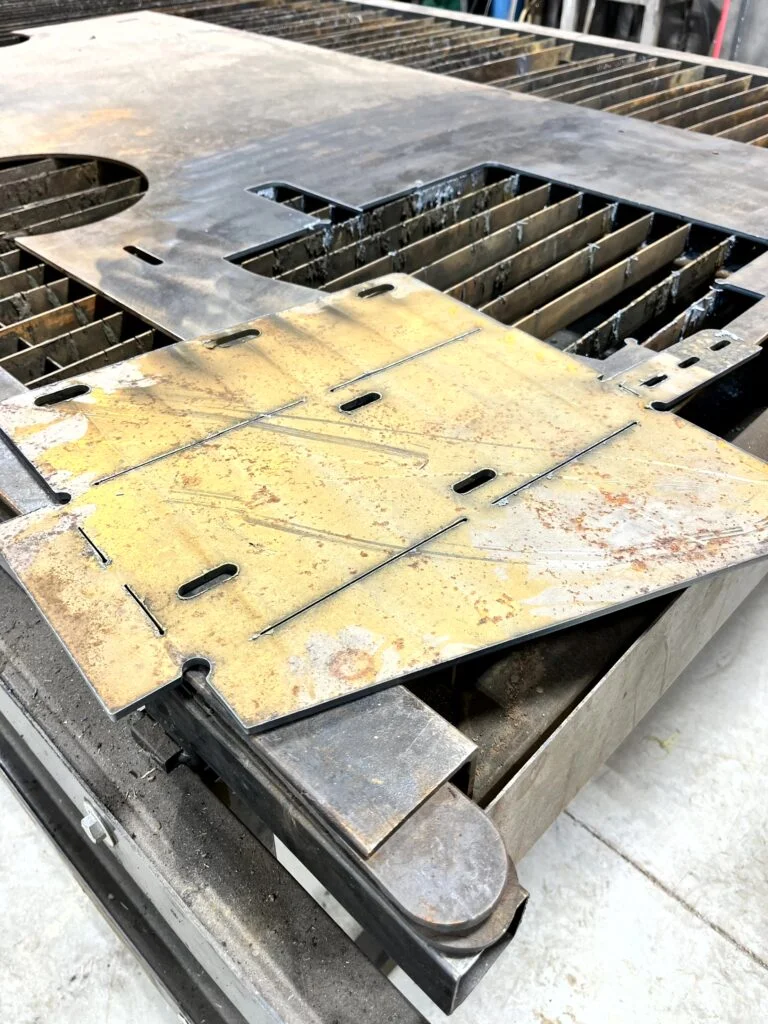
When you import an entire product assembly, the software automatically identifies different material types and thicknesses. It separates components and groups, matching parts to the appropriate sheet stock. You don’t have to manually sort aluminum parts from steel parts or segregate quarter-inch plates from half-inch plates. The system handles this classification automatically.
Grain Direction Control
Certain manufacturing applications require strict adherence to material grain direction for structural integrity or aesthetic purposes. Nesting software allows you to define the required rotation angles for specific parts. You can restrict rotation entirely or limit it to 90-degree increments to ensure the final cut respects the physical properties of the source material.
Common Line Cutting
Common line cutting stands out as one of the most effective ways to reduce production time. This function places parts with shared straight edges directly against each other. The laser or water jet makes a single shared cut to separate two distinct parts.
This intelligent routing reduces total cutting time, lowers energy consumption, and maximizes material usage. Many older programs force users to manually position parts to achieve this result. Modern applications automatically calculate common line paths.
Practical Applications For Laser, Water Jet, and Router Cutting
Manufacturers apply these nesting tools across various computer numerical control machines. The software adapts perfectly to laser, water jet, plasma, and router cutting environments.
You can load predefined manufacturing cells that include your specific machine kinematics, table dimensions, and tool setups. For a laser or plasma table, heat management is critical. The software allows you to adjust the cutting sequence to distribute heat evenly across the material. By shifting the cutting order, you prevent thermal distortion on neighboring parts.
When programming routers, the software inherently understands material depth. It recognizes the difference between internal pockets and external profiles and adjusts the toolpath accordingly, without requiring manual depth inputs for every feature.
How Nesting Software Simplifies Your Manufacturing Process
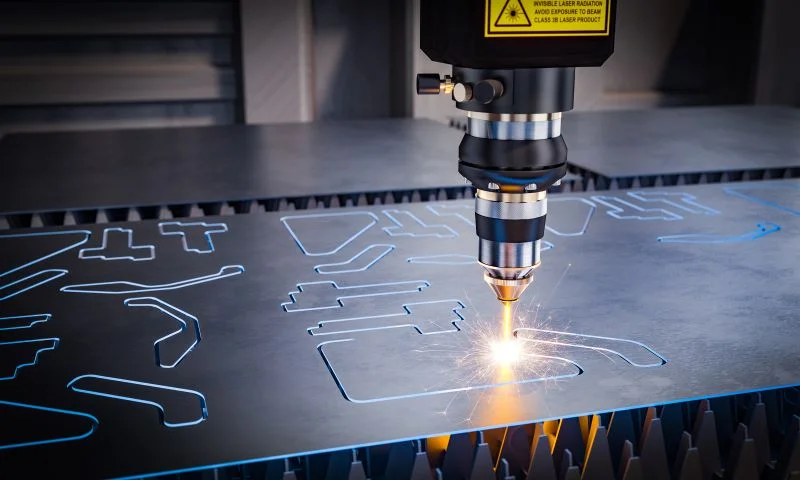
The primary advantage of these applications lies in their straightforward operation. The interface allows programmers to select entire assemblies or pick individual parts from a detailed list.
Once you select your components and enter the required quantities, the software quickly computes the best layout. You can accept the first available solution for immediate production. Alternatively, you can set a specific time limit for the calculation. Giving the algorithm one or two minutes to process often yields highly optimized layouts for complex geometries.
The system generates visual stock representations so you can run a full simulation of the cutting process. You can observe the toolpath, verify the sequence, and catch potential collisions before sending any code to the machine floor. Operators can toggle internal guide tags on or off to keep the visual workspace clean during programming.
For environments that require different data formats, you can export the final nested layout as a DWG or DXF file. The software also includes standard post-processors to generate the specific G-code required by your machine controller.
Optimize Your Cutting Operations Today
Stop wasting valuable production hours on manual layouts. Automated nesting software provides the precision, speed, and flexibility needed for modern manufacturing. By automating material recognition and path optimization, you reduce waste and increase throughput.
Review your current numerical control programming tools. Explore modern nesting solutions today to optimize your cutting processes, reduce operational costs, and improve your manufacturing efficiency. If you are a current SOLIDWORKS user, you may already have this valuable CAM solution in your toolset. Learn more about Shop Floor Programmer here.
You can watch the full 3DEXPERIENCE World 2026 on-demand session, Reduce Time and Waste with Nesting, below.
Watch more on-demand sessions from 3DEXPERIENCE World 2026 here: https://www.solidworks.com/community/best-of-3dexperience-world-2026