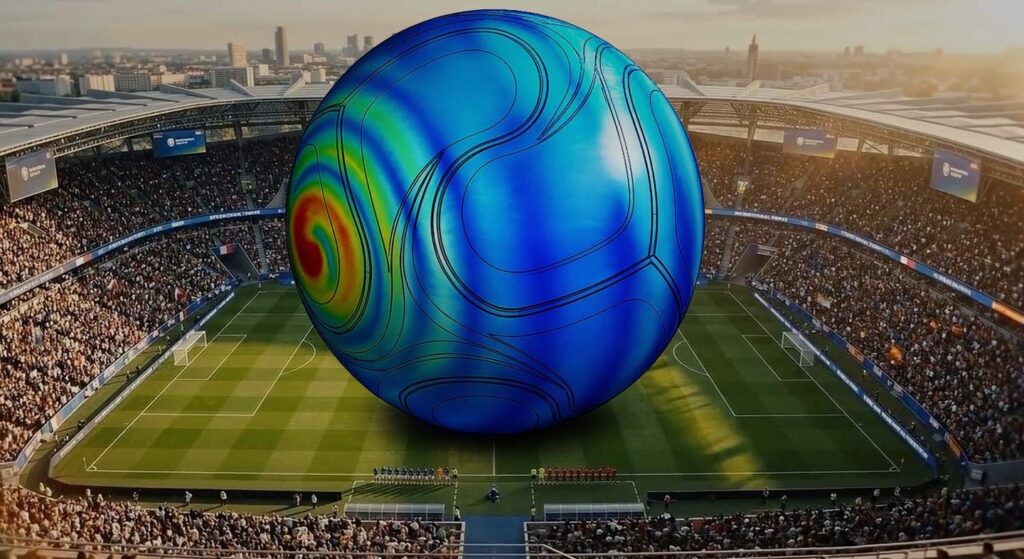

It’s a fact: the world loves football (or “soccer” in North America). There are over four billion football fans worldwide, and fans’ passion for the sport has led to some of the biggest and most well-attended international tournaments.
It’s a physical sport, both in the literal and metaphorical sense. The feats football players perform with their feet are awe-inspiring, and so is the science behind it. In fact, the history of the sport and the fervor of the fan community inspired us here at SOLIDWORKS. It’s one thing to watch football being played; it’s another thing to understand the physics that makes it work.
We thought about the past, present and future of football. How has the game changed over the centuries (really, millennia) it’s existed? When a soccer player bends it like Beckham, how do the physics behind that kick work? And as data capture and metrics become increasingly important across all sports, how will new electromagnetic components on and off the field affect the game?

Understanding the Physics of Football with SOLIDWORKS
All of these questions and more can be answered with simulation. SOLIDWORKS has a powerful simulation portfolio that covers a range of simulation types. With tools built for engineers and designers and advanced, analyst-ready solutions, the SOLIDWORKS Simulation portfolio can answer the questions physics poses.
We used structural, fluid, and electromagnetic simulations to answer our questions about football. Those answers lead to a better understanding of product design, best engineering practices, and much more. When you understand exactly how a product behaves under real-world conditions, you can optimize its performance without wasting time or resources. And when you understand it using arguably the world’s most popular sport as an example, you can reach your goals (get it?).
In this blog series, we explore how simulation can help you understand football and beyond.
Structural Simulation: Testing and Evolving Gear for Peak Performance
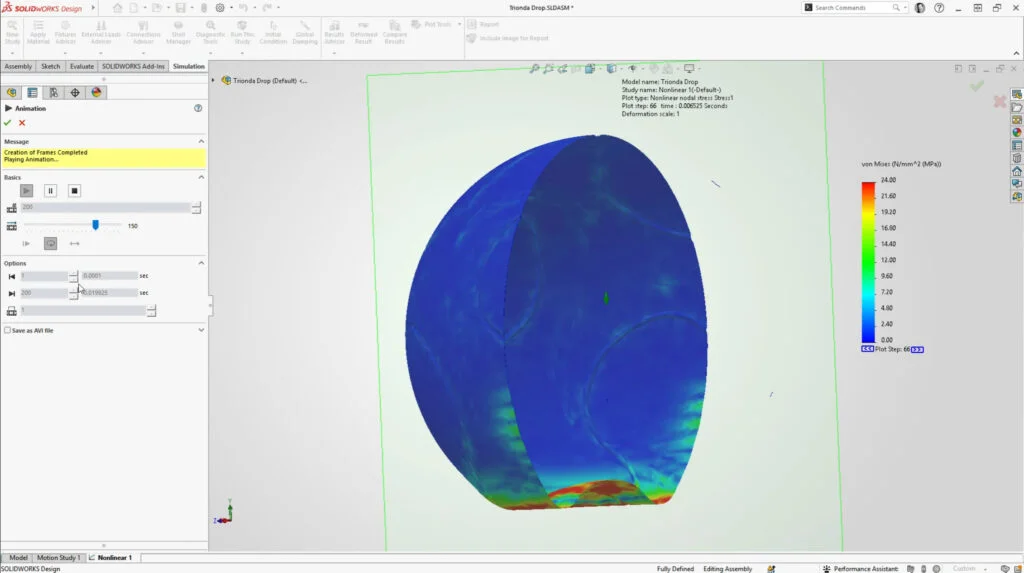
Structural simulation uses finite element analysis (FEA) to predict how a physical structure will respond to external loads. It answers the following questions: Will this product bend, break, or vibrate too much? And if so, what changes can be made to the product design or materials to optimize its performance?
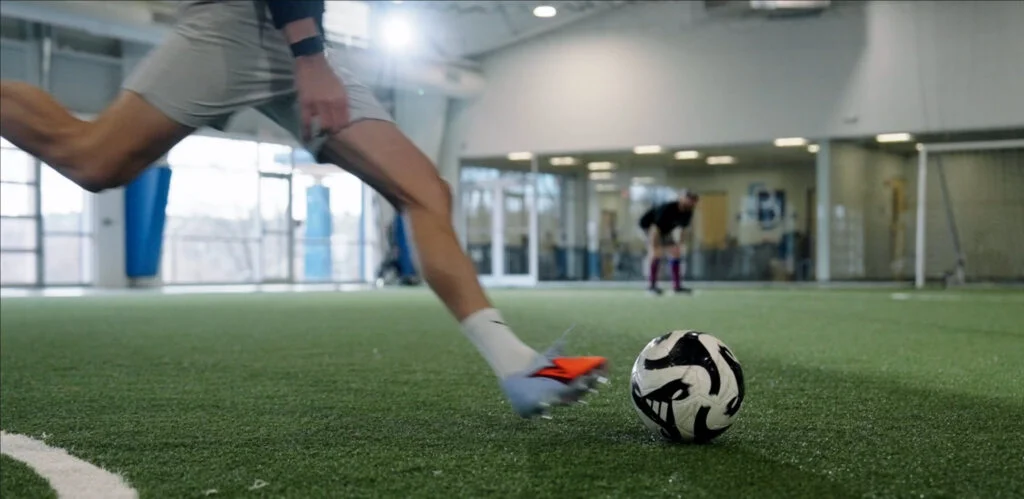
But what about a product that is meant to be kicked? In the first international football tournament back in 1930, footballs were made out of leather. This non-waterproof material could turn into a hazard on the field due to added water weight during rainy games. Combined with the weight and heft of older football cleats, it’s no wonder materials and designs for footballs have changed so much in the past century.
With SOLIDWORKS Simulation Premium and SOLIDWORKS Simulation Analyst on the cloud, we compared the performance of an old leather ball and a new 2026 match ball. By applying virtual forces that mimicked a powerful kick, we could see exactly how the materials held up and how their evolution led to a better ball.
Flow Simulation: Unraveling the Secrets of Football Aerodynamics
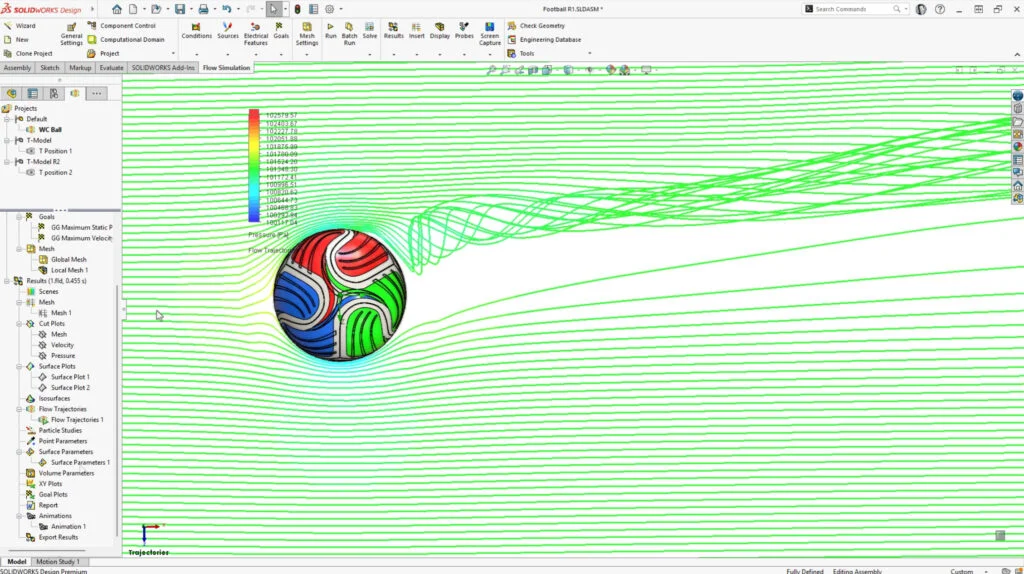
It occurred to us that today’s professional football players are, in fact, masters of physics. By kicking a ball a certain way, with a certain part of their foot, with a certain speed and a certain velocity, they can bend and curve kicks in the air. The physics behind this move comes down to fluid dynamics and the Magnus Effect. This physical phenomenon occurs when a spinning object curves away from its straight flight path as it moves through a fluid, such as air.
Fluid or flow simulation uses computational fluid dynamics (CFD) to test these effects virtually. With SOLIDWORKS Flow Simulation, we tested a ball’s flight path and visualized the exact science behind its trajectory, spin, and overall aerodynamics.
By testing different panel shapes, seam depths and surface textures, engineering physics experts can help football-playing physics experts out by designing balls that can be properly controlled and do what the footballer wants them to do. This virtual testing reduces the need for physical prototypes and helps manufacturers create products that perform consistently in all weather conditions.
Electromagnetic Simulation: Making the Invisible Visible
The future of all sports, including football, is infused with technology. Making crucial calls in professional sports requires split-second decision-making that can affect the outcome of a match. Now, with embedded sensors, antennas, and other electronic equipment, game data no longer relies solely on a referee’s eyes. Modern football now incorporates smart tracking technology directly into balls, player wearables, and stadiums.
But today, everyone has a smart device, from their phones to their watches to their glasses. How do you test and ensure the right data is tracked in a stadium with over 60,000 cheering fans?
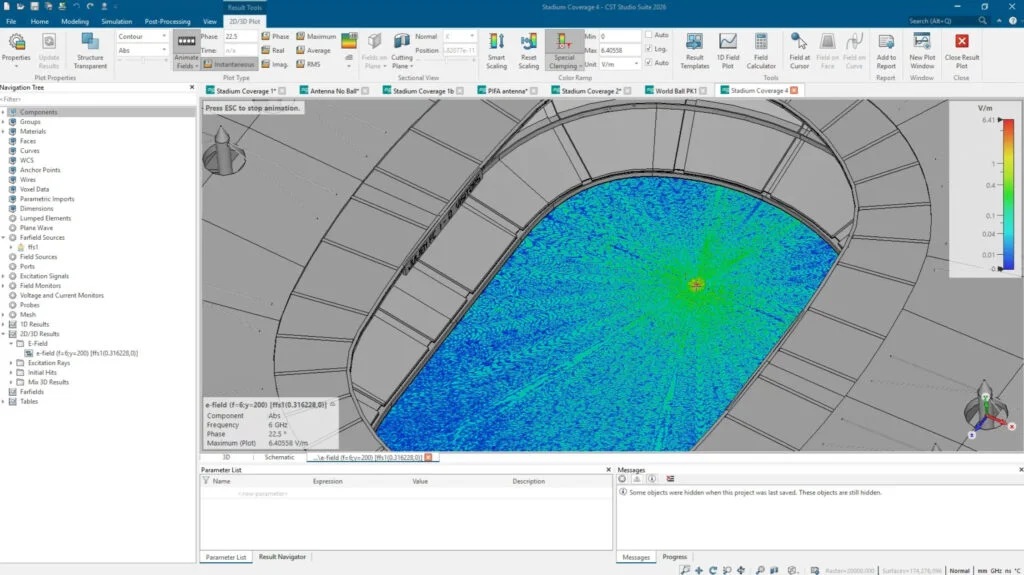
Enter Electromagnetics Engineer, powered by CST Studio Suite. We used this powerful electromagnetic simulation tool to analyze antenna performance inside a match ball to ensure the signal remained strong and clear. While electromagnetic signals may be invisible to the naked eye, virtual testing software makes it easy to gather data about what happens to a ball when it gets kicked into, or just misses, a goal.
Beyond the Field: Simulation’s Impact on Product Development
The physics of football was a fun and engaging subject to apply SOLIDWORKS simulation tools. The same simulation technologies that optimize a spinning ball or smart tracking chip translate directly to other demanding industries.
Boat manufacturers use flow simulation to reinvent boat building. Medical device designers use structural simulation to ensure implants can withstand body movements. Aerospace companies test antenna performance and placement to guarantee reliable communication in flight. The broad capabilities of these simulation solutions help organizations across the globe reduce costs, speed up development and produce higher-quality products.
Do you use simulation in your design process? Are you interested in learning how? Stay tuned for deeper dives into how SOLIDWORKS simulation solutions transform football (or soccer, again, for our North American friends) and how they can transform your product development process as well. Visit our website to learn more about world-class simulation and world-class football.
Next up, we’ll delve into the history of football and how structural simulation can empirically show the reasons why changing product materials can help you reach your goals.