
How does technology affect sports? A few decades ago, referees and umpires relied entirely on human eyesight to make critical decisions. Today, technology provides answers instantaneously. We’ve all seen games turned upside-down because referees can view plays from different angles with video. Now, sporting equipment is infused with technology as well.
The match balls at this year’s FIFA World Cup contain embedded sensors that transmit their exact position up to 500 times per second. Combined with stadium tracking systems and video angles, officials now know exactly when a ball crosses the goal line, how fast it travels, and when a player’s foot makes contact. Smart footballs are a real thing. But how do they work?
The Challenge of Designing Smart Footballs
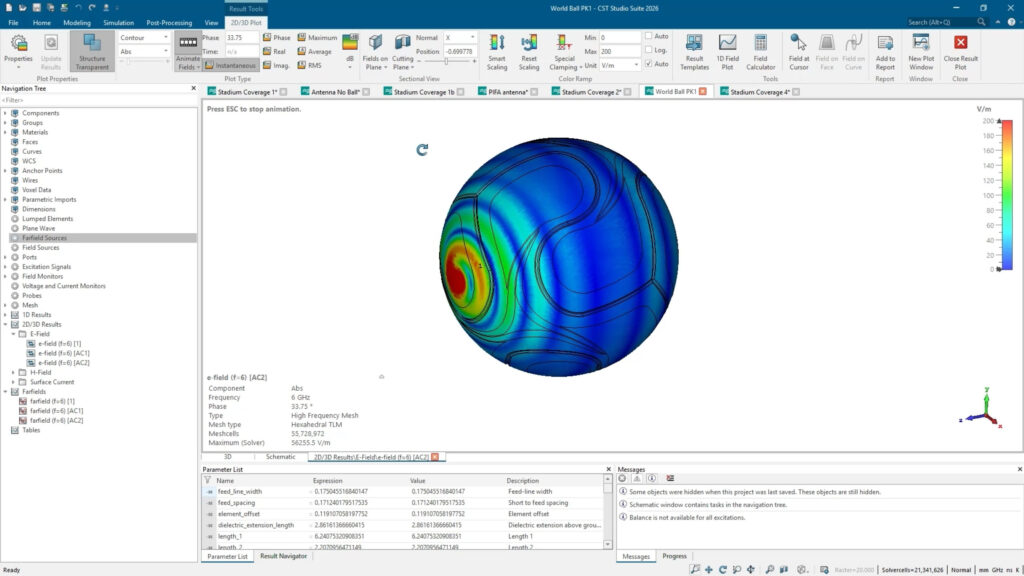
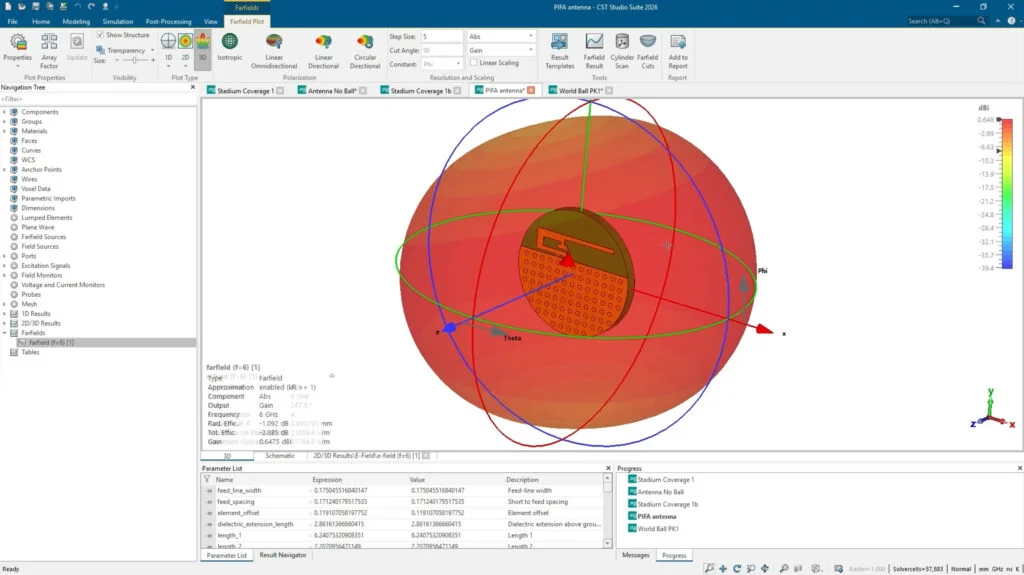
Designers and engineers face major hurdles when placing delicate electronics inside a sports ball. They must design an antenna system that works reliably inside a spinning, deforming sphere. The World Cup match ball features polyurethane outer panels, adhesives, and an internal rubber bladder. All of these materials affect signal transmission. The resonant frequency of an embedded antenna can go off target, the radiation pattern can change, and the efficiency of the antenna itself can drop. And that’s just the start.
Tracking the Ball in a Crowded Stadium
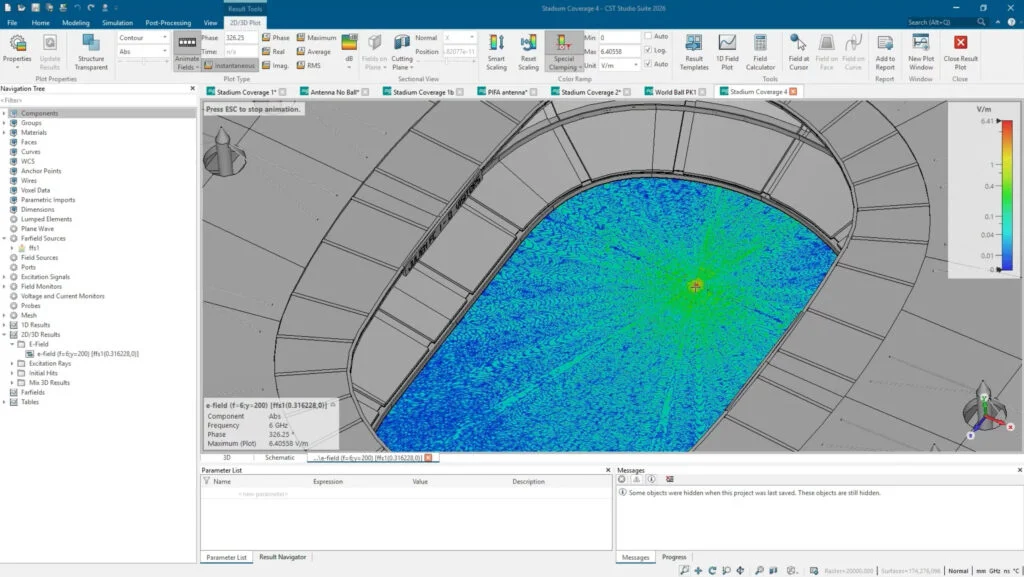
The engineering challenge extends far beyond the ball itself. The antenna and sensors must maintain millimeter accuracy inside a stadium packed with tens of thousands of people, all with their own smart devices. A modern arena acts as a forest of electronic interference. Over a dozen antennas positioned around the field perimeter track the ball. These systems use time and distance of arrival to calculate the exact position of the ball. Engineers must evaluate coverage gaps, edge cases, and placement tradeoffs before they build any physical infrastructure.
Testing Designs with SOLIDWORKS Electromagnetic Simulation
Testing electromagnetic fields presents a unique challenge. Wireless signals are invisible. It’s easy to test a physical prototype: drop it, hit it, run air through or around it. But how do you test what you can’t see? How do you know where electromagnetic waves stop? That’s where Electromagnetics Engineer, the powerful cloud-connected electromagnetics simulation solution on the 3DEXPERIENCE platform, comes in.
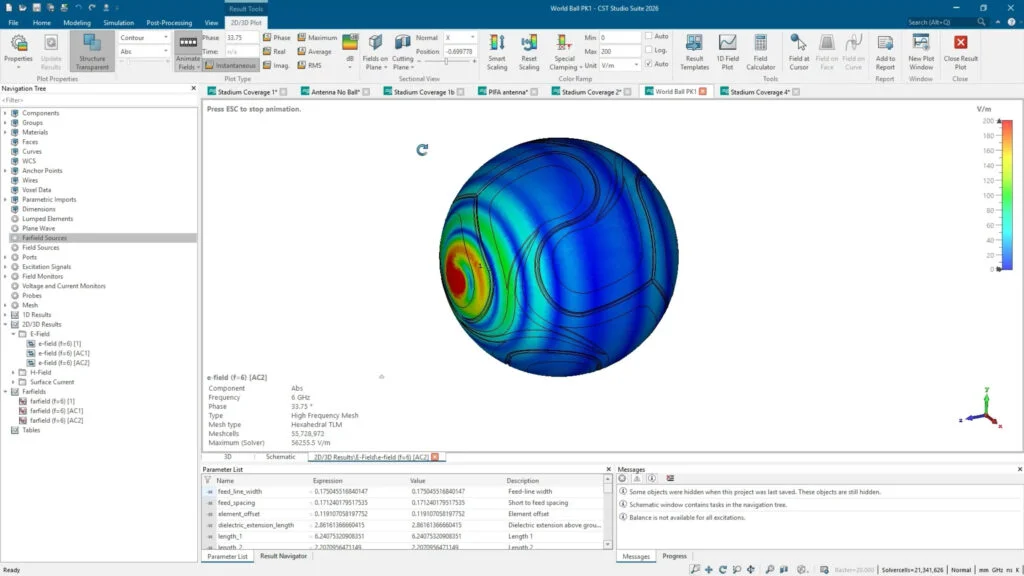
With this electromagnetics simulation tool, designers and engineers can simulate an antenna in isolation, then place it virtually inside a match ball. They can visualize the electromagnetic fields to see exactly how the antenna interacts with every layer of the ball. If the materials cause a frequency shift, designers and engineers can tune the antenna back to the target frequency.
They can also scale up the simulation to model signal propagation throughout the entire stadium. Electromagnetics Engineer users can place the virtual ball right on the goal line to see how the signal travels, reflects, and reaches each sensor receiver. This advanced virtual prototyping eliminates the need for expensive trial and error.
Design Advanced Products with Virtual Prototyping
As technology rapidly advances, designers and engineers must continually adapt to ensure their products function perfectly in real-world environments. Whether you are tracking the electromagnetic frequencies at the biggest sporting event on the planet or trying to tune a personal smart device correctly, electromagnetics is becoming more important than ever. Virtual prototyping provides the certainty you need as your technology evolves. With Electromagnetics Engineer, you’re never left unsure of what’s happening on the pitch or inside your products.