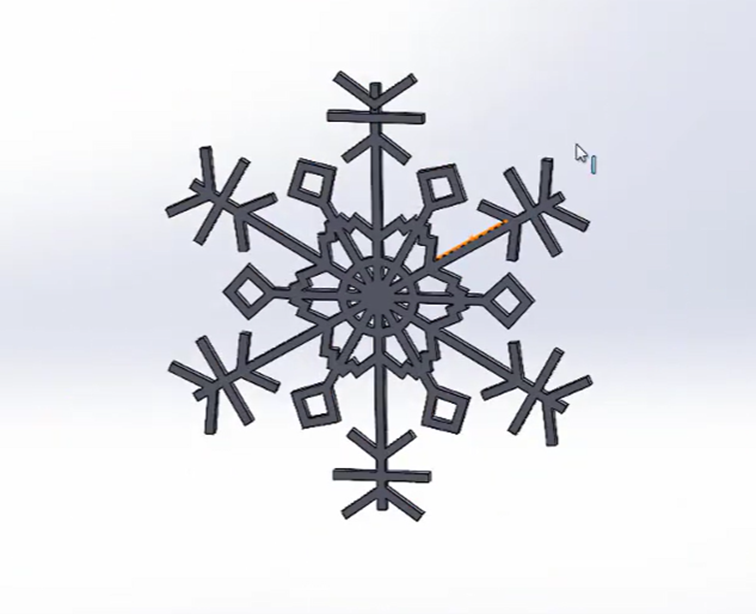

It’s April and time to think of Spring—but in Massachusetts today it is snowing. Now is a great time to share the “Snowflake Project” by middle school teacher Amy Hamilton. Amy uses this project to excite her students, ages 10 to 13, about science, technology, engineering and math (STEM) with SOLIDWORKS.
Teaching middle school students the principles of engineering requires more than just reading from a textbook. It demands practical tools, engaging projects and a clear connection to real-world applications. When educators introduce professional design software into the classroom, they give students a definitive advantage in science, technology, engineering and math (STEM).
Amy Hamilton, a dedicated middle school educator, demonstrates exactly how effective this approach can be. By integrating SOLIDWORKS into her curriculum, she transforms complex engineering concepts into accessible, hands-on learning experiences for students ages 10 to 13. Her methods offer a proven framework for K-12 educators and STEM coordinators who want to improve technical education in their own schools.
This article explores her transition from manual drafting to modern computer-aided design (CAD), her success with additive manufacturing and the practical strategies she uses to prepare young students for technical certifications.
The Evolution of Classroom Drafting and Design
Technical education has changed drastically over the past four decades. Amy began teaching drafting, design and CAD in the 1980s. During those early years, her classroom relied heavily on traditional tools. Students learned the fundamentals of geometry and spatial reasoning using drafting boards, paper and pencils. These manual techniques provided a strong foundation in precision, but they lacked the dynamic visualization capabilities of modern technology.
In 2009, Amy transitioned her curriculum entirely to SOLIDWORKS. This shift represented a fundamental change in how students interacted with their assignments. Instead of drawing flat, two-dimensional views of an object, students could now build fully realized three-dimensional models. They could rotate their designs, test parameters and identify potential flaws before ever producing a physical prototype.
For educators looking to update their STEM programs, Amy’s professional journey highlights an important truth. Moving from traditional methods to modern CAD software does not mean abandoning the core principles of design. Rather, it gives students a more effective way to apply those principles. Modern software provides immediate feedback, which keeps young learners motivated and engaged in the engineering process.
Bringing STEM to Life Through Practical Projects
One of the most difficult challenges for STEM coordinators is finding projects that hold the attention of middle school students while still teaching rigorous technical skills. Amy solves this problem with her “Snowflake Project.”
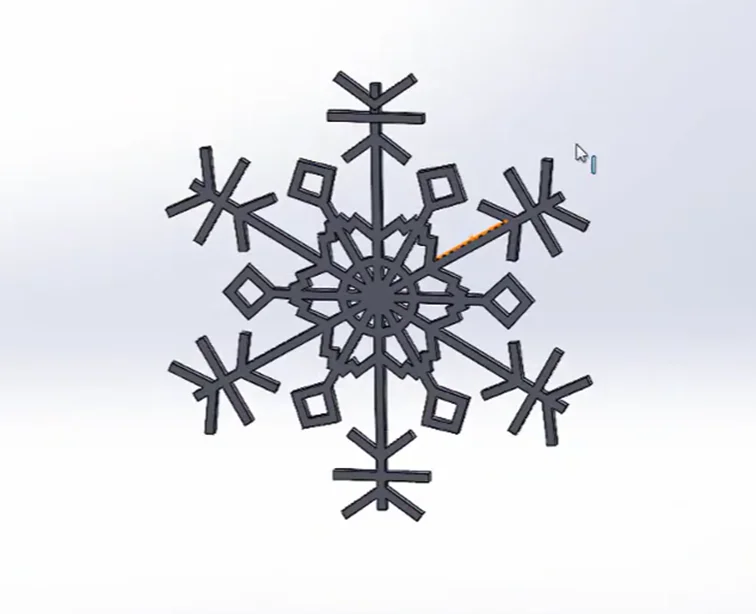
During the winter months, she tasks her young students with designing complex snowflakes using SOLIDWORKS. This assignment sounds simple on the surface, but it requires a deep understanding of geometric relations, radial symmetry and precise measurement. Students learn how to navigate the software interface, apply specific design constraints and manipulate tools to create unique patterns.
The Snowflake Project succeeds because it connects technical software training with creative expression. Students do not feel like they are completing a standard textbook drill. They act as actual designers, making independent decisions about the aesthetics and structural integrity of their models. Projects like this prove that 10- to 13-year-olds can master professional engineering tools when the instruction is practical, creative and highly relevant to their interests.
Integrating Additive Manufacturing Across Multiple Grades
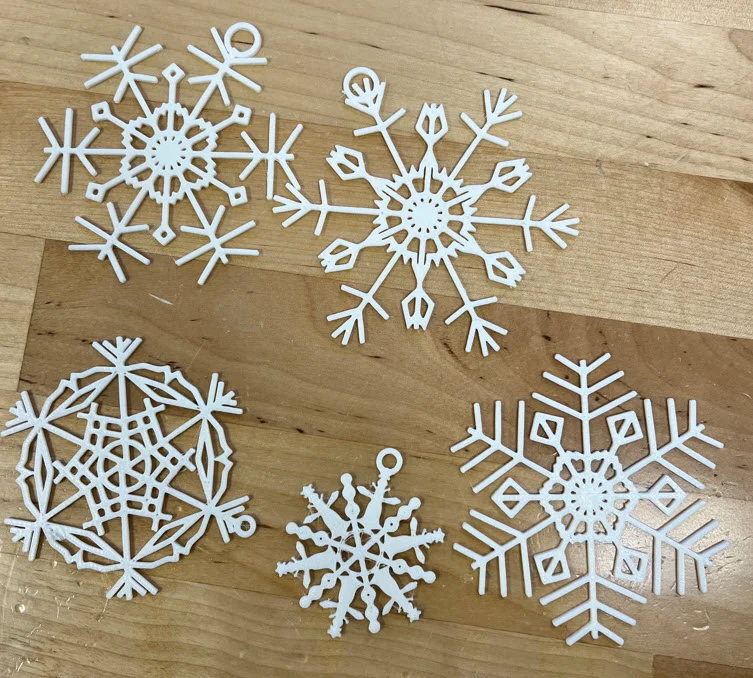
CAD software becomes even more powerful when paired with modern production technology. Amy incorporates additive manufacturing into her curriculum across three different grade levels. This comprehensive approach ensures that students do not just design virtual models on a screen. They actually bring their ideas into the physical world.
When students use 3D printers to manufacture their SOLIDWORKS designs, they learn critical lessons about material properties, structural tolerances and real-world engineering constraints. If a snowflake design has sections that are too thin, the 3D printer will fail to produce it correctly. This immediate, physical feedback teaches students to revise their work and improve their initial concepts.
This emphasis on additive manufacturing yields measurable results. Amy’s students regularly participate in Skills, a state-level technical competition that tests students on their engineering and design capabilities. Against stiff competition, her middle school students consistently excel. They recently took home multiple gold medals at the event. These victories validate her teaching methods and demonstrate the high level of competency young students can achieve when given access to professional-grade tools.
Building a Global Educator Network
Successful STEM education does not happen in isolation. Teachers need strong professional networks to share resources, discuss new technologies and discover fresh ideas for their classrooms. Amy serves as an educational leader, dedicating her time to helping other teachers around the world improve their CAD curriculums.
As the leader of the POLK-FL SOLIDWORKS User Group, she creates a collaborative environment for educators and commercial customers alike. These user groups serve as a critical bridge between the classroom and the professional engineering industry. By bringing these two groups together, Amy ensures that her teaching methods align with the current needs of the workforce.
Her leadership extends far beyond her local district. She regularly hosts virtual user group meetings that connect people across different continents. In one notable session titled “London Calling Oahu,” she brought additive manufacturing expert Kirby Downy into the classrooms of local teachers in Hawaii. Downy presented his impressive 3D modeling work from the entertainment industry. By exposing students and teachers to these real-world examples, Amy helps them understand the exciting career possibilities that stem from learning CAD.
Anyone involved in STEM education can join the POLK-FL SOLIDWORKS User Group or one of the many other SOLIDWORKS User Groups located around the world. These organizations provide regular virtual meetings, offering ongoing support and inspiration for educators who want to improve their technical programs.
Measuring Success Through Student Certification
Providing students with exciting projects is important, but STEM coordinators also need measurable outcomes to evaluate the success of their programs. Amy focuses heavily on student certification. She prepares her middle-grade students to take official SOLIDWORKS certification exams, which are the exact same credentials earned by college students and industry professionals.
Earning a professional certification gives middle school students a massive boost in confidence. It proves they possess a verified, highly sought-after technical skill before they even enter high school. For schools, these certifications provide concrete data that their STEM investments are paying off. When students pass these rigorous exams, it demonstrates that the curriculum effectively translates complex software training into genuine technical proficiency.
Discover Proven Teaching Strategies
Updating a middle school STEM curriculum requires careful planning, effective software and proven pedagogical strategies. Amy Hamilton’s success with the Snowflake Project, additive manufacturing and state-level competitions shows exactly what young students can achieve when given the right tools.
If you want to learn how to apply these methods in your own district, watch her presentation in the SOLIDWORKS EDU Webinar series. In her session, “Empowering Young Engineers: Teaching SOLIDWORKS to Middle-Grade Students,” Amy details her specific projects, classroom tips and her approach to student certification.
Watch the full webinar today to gain actionable insights you can apply directly to your STEM programs.
Thank you Amy Hamilton and Valerie Lecolle for helping our SOLIDWORKS educators.
Design well. Marie