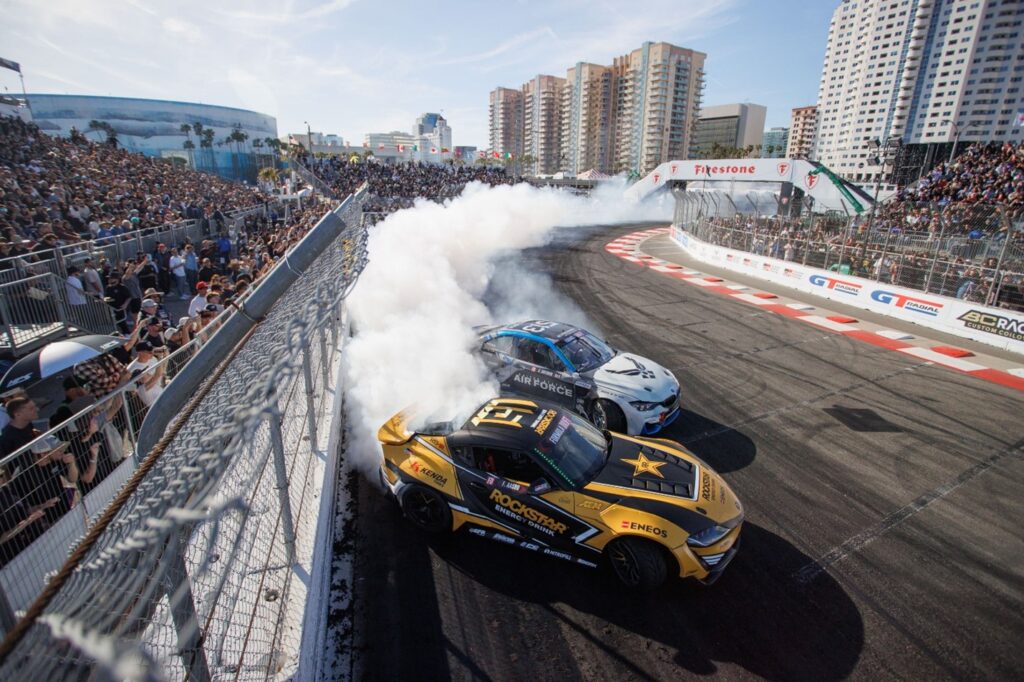

When it comes to winning, Stephan Papadakis, owner of Papadakis Racing, said there are several key things. “Number one is reliability. You know the old saying, to finish first, you first must finish. So, the first thing is reliability. Next is understanding what the rules are of the series you’re in. And last, is making sure that you have a competitive vehicle and that you drive it well.”
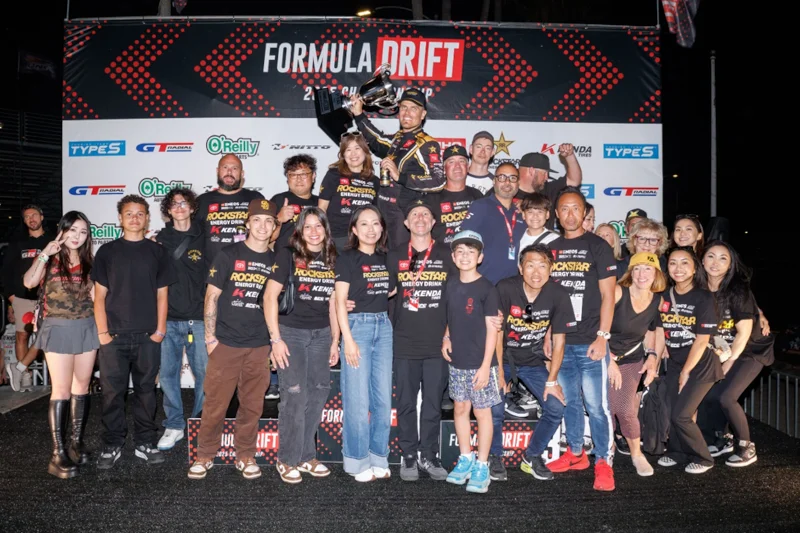
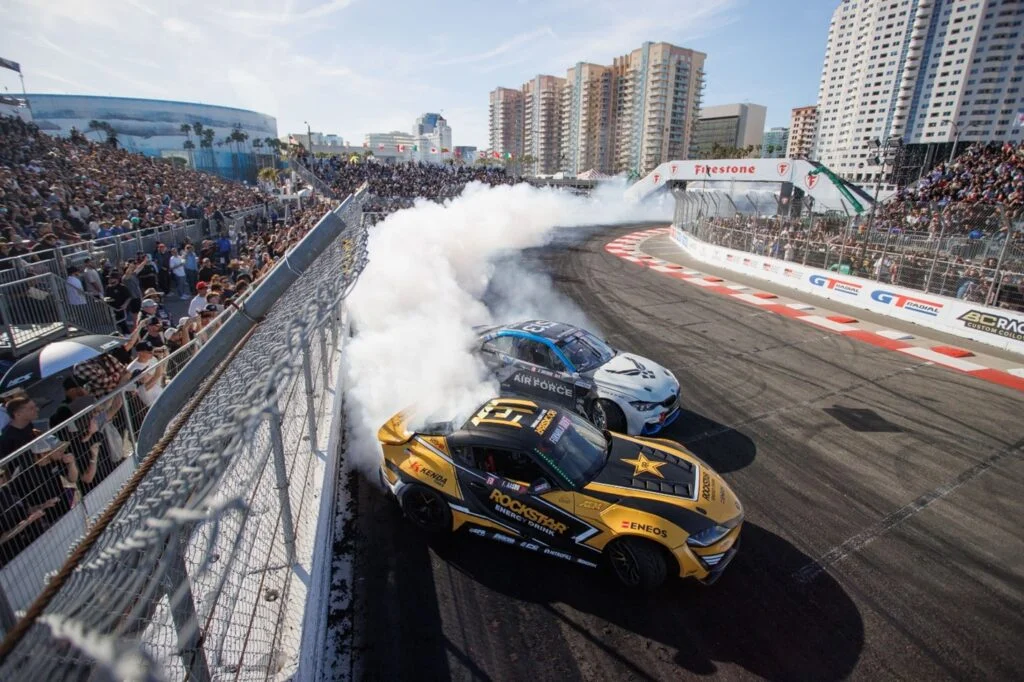
He speaks from experience, having been in the racing industry for nearly three decades, building and racing cars. His racing team, Papadakis Racing, began “drifting” in 2004 and has the most wins in Formula Drift history, having earned the 2015, 2021, and 2022 championship titles with driver Fredric Aasbo, in a Toyota Supra, as well as back-to-back championships with driver Tanner Foust in 2007 and 2008 in a Rear Wheel Drive converted Scion tC.
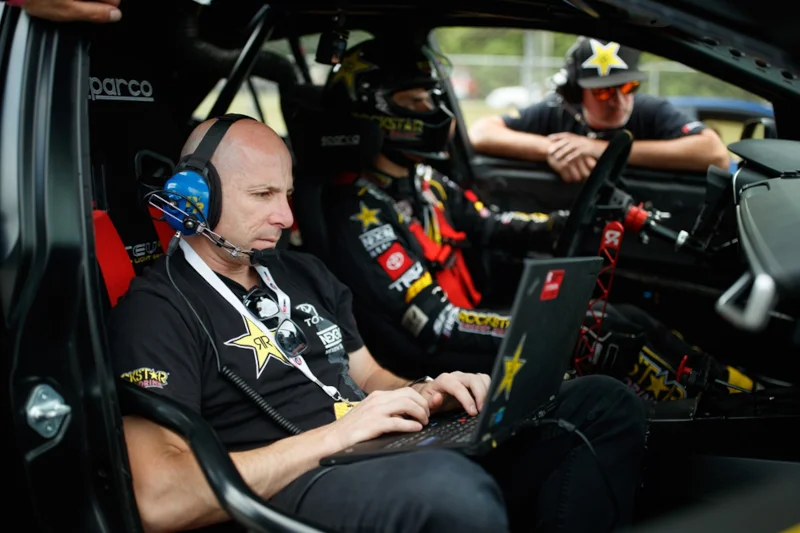
For those not familiar, Drift racing is a motorsport that started in the 1970’s in Japan, where drivers intentionally induce, maintain, and control rear-wheel traction loss to slide cars sideways through corners at high speeds.
Stephan grew up in Huntington Beach, California, in a bustling car scene, and got into cars and mechanics before he even had a driver’s license. He started off by building radio-controlled cars for off-road racing and attended weekly club competitions. “When I turned 16, I realized I could do this with real cars, and so I stopped the whole RC [radio car] thing and started going to drag races with some buddies, and that was the beginning of it.”
Growing up in southern California, he said, there was always a big culture of aftermarket cars, racing, and car clubs. The rise of imported cars and sport compacts also began to emerge. “It wasn’t just old hot rods. It was these newer Hondas, Toyotas, and Nissans and turbocharged cars that were really getting a bit more popular. That was a scene that I fell into.”
Stephan’s career really accelerated in the 90’s when the import car scene picked up. He went from “souping” up cars to focusing on drag racing. He competed in the Battle of the Imports drag racing competition. “My buddy Shaun Carlson and I built a car to compete in that series, and then started getting sponsorships, and around the year 2000, the Fast and Furious movie came out, and there was a bunch of new magazines and DVDs coming out about the scene, and that whole sport of drag racing with compact cars really picked up.”
Stephan’s first drift build was a 1989 Nissan 240SX, quickly followed by a Honda S2000 machine. His other notable builds include an AEM Drag Honda Civic Hatchback, a 2001 AEM Drag Honda Civic Coupe, and a rear-wheel-drive AEM/DriverFX.com Honda Civic.
Papadakis Racing started building engines to boost horsepower, changing the suspension for better traction, and adding safety gear. Then, they moved to building cars from the ground up. This included a chassis tube car he and racing innovator Shaun Carlson built, which received acclaim in the scene and led to sponsors.
Today, Papadakis Racing is backed by sponsors such as Toyota and Rockstar Energy. In addition to building cars and drift racing, Papadakis Racing now has an engineering division, which Stephan runs.
Both Papadakis Racing and Papadakis Engineering use SOLIDWORKS for their design, prototyping, and fabrication work. Stephan has been using SOLIDWORKS for 16 years, and his skills on the track and engineering stem from experience, as he did not pursue any professional schooling.
He is a self-taught SOLIDWORKS user who learned mainly from reading engineering books, hands-on experience, mentors and “and looking over the shoulder of friends and engineers who are excellent at it.” One of his sponsors back in the day, AEM [Advanced Engine Management] had an engineering team that designed motorsport and automotive aftermarket parts that he would get together with to ask questions and he would read engineering books to better understand. “After that, I started hiring engineers. I had a better vocabulary and could have a more in-depth conversation with the engineers.”
Today, he operates Papadakis Racing’s 8,500-square-foot shop, with half the space dedicated to the motorsports team, and the other half for the prototyping business. On the weekends, they hit the track with 12 or more crew running two cars, and for the engineering projects, they have six to eight engineers and technicians working on a project at a time.
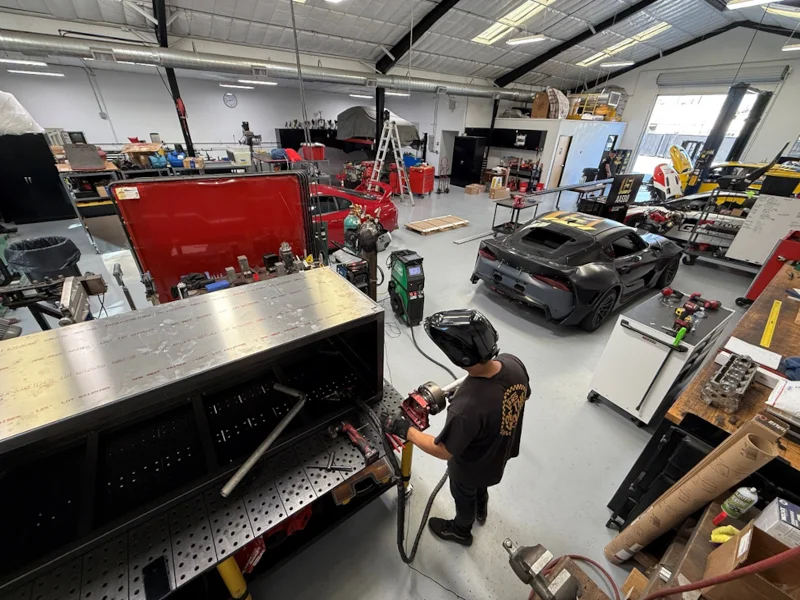
The types of parts they build are very diverse and include 3D-printed plastic and metal parts, as well as machined aluminum and steel parts. They also do a lot of metal fabrication, including exotic materials such as titanium and Inconel 625. In addition to their assembly design capabilities, they also use SOLIDWORKS flow simulation functionality.
Stephan said the powerful capabilities for building assemblies and its ease of use are what continue to make SOLIDWORKS their software of choice.
“One of the reasons we stick with SOLIDWORKS is because we really don’t reach the limit on it… It’s so powerful, and that’s a good thing. We don’t want to reach the limits of the software.”
His engineering division builds on the company’s expertise in car building and on Stephan’s personal interest in understanding the mechanical aspects. “We’ve been building race cars with more than 1000 horsepower engines, and these cars have to be safe, at the event on time, and reliable. We learned a huge amount on how to build things from scratch; from sheet metal and machining parts and assemblies, and we’ve taken those skills, and we’ve applied them to the industry.”
He said they do a lot of prototyping of machines and products for clients. They recently made a hydrogen fuel cell and energy storage device. They’ve also converted a Toyota GR Yaris gas engine into a dual-electric-motor autonomous vehicle. In addition, they do displays for trade shows. You dream it, and they’ll make it. “A company will have an idea of what they want to build, the engineers have designed it, and they need someone to bring that to fruition, and we’re the ones that can do it.”
These days Stephan no longer races. He gets his hands dirty on engineering projects and serves as a spotter for the drift team. After 20 years of racing, he decided he would be better at running the business. “There were drivers who were better than me who could beat me. So I thought that if we could bring on drivers who are at the top of their game, build cars, and I could manage the team, it would be the perfect combination, and we could be extremely competitive. I just figured I was a better manager and team owner than a driver because the goal was to win, and that is how I thought we’d be the most competitive.”
Stephan said most racing teams don’t want to give away their competitive advantage, but he isn’t afraid to share the tricks of the trade. He shares a lot of what the company does on his YouTube channel to inspire others. On the channel, Stephan and his team showcase their work and show off their racing engines by disassembling them and displaying what’s inside “to show the cool stuff that I would want to see,” said Stephan. “I wished more teams would show us the cool racing stuff that they did, but the problem is racing teams don’t want to show you what they do to the race car, because it’s their competitive advantage. So, I had this epiphany. I was like, ‘you know what?’ We’re going to stay a step ahead. I’m not worried about it. Let’s promote the team. Let’s promote what we do through YouTube and our social media and show the cool stuff that I would want to see.”
“I think there’s a lot of gear heads and engineers out there that love racing, not necessarily for what’s happening on the track and the drivers, but for what’s happening under the hood and body and how the cars are built, and the technology within the car, and how the components work together, and the tuning of it. There’s a whole new layer in motorsport that’s a bit of a black box that teams don’t let you in on, and so that’s what really gets me interested in motorsport. It’s not necessarily the racing on the track; it’s the building and the engineering of the race cars.”
When he’s not working, Stephan spends time with his wife, his two kids, ages 11 and 2. He also has some street cars he likes to cruise, and enjoys surfing, skiing, and bike racing.
Other fun facts about Stephan:
- His street cars include a 72 Toyota Celica that he restored and a 1995 Toyota Supra.
- His favorite movie is The Matrix.
- He listens to 80’s music and Pink Floyd.
- He hopes sharing his passion and his story will encourage others to build something themselves.
“I didn’t come from a motorsport family. I didn’t have a traditional engineering education, yet I can have a career in both. I hope I can motivate and inspire other folks.”
For more information, visit https://papadakisracing.com/.
For an example of one of Stephan’s SOLIDWORKS designs, check out this blog.