2026 Manufacturing Trends: Agility, Automation, and the New Economics of Production


One theme is becoming increasingly clear in 2026 manufacturing trends: success will be driven less by bold bets and more by pragmatic execution. Across industries, manufacturers are navigating rising costs, unpredictable demand, ongoing supply chain shifts, and continued labor challenges. In response, many are focusing on agility, cost visibility, and operational discipline rather than sweeping transformations.
Based on ongoing conversations with manufacturers, contract producers, and suppliers, several key trends are emerging that will shape manufacturing strategies over the coming year.
Sustainability Is Becoming a Cost Structure Issue, Not a Marketing One
One of the most notable shifts manufacturers are experiencing is how sustainability is showing up on the balance sheet. In recent years, environmental initiatives were often treated as market-facing strategies—important for brand image and customer perception. That equation has changed.
Today, energy costs, fuel prices, and compliance requirements tied to cleaner production methods are increasingly embedded directly into the cost of goods sold. Rather than absorbing those increases, many manufacturers are passing them along to customers. The result is a more transparent pricing environment where sustainability comes with a measurable cost.
At the same time, manufacturers and consumers are continuing to make progress in responsible recycling and waste management. End-of-life products, packaging, and scrap are being handled more thoughtfully—but often with added fees for proper disposal and compliance. The combined effect is a gradual shift in responsibility: environmental stewardship is less about consumer idealism and more about paying for the full cost of responsible production and disposal.
Automation Is Advancing—but Flexibility is Still a Winning Strategy
Automation continues to move forward, but the idea that every manufacturer must fully automate to remain competitive is only partially true. In reality, the right level of automation depends heavily on business model, product mix, and demand patterns.
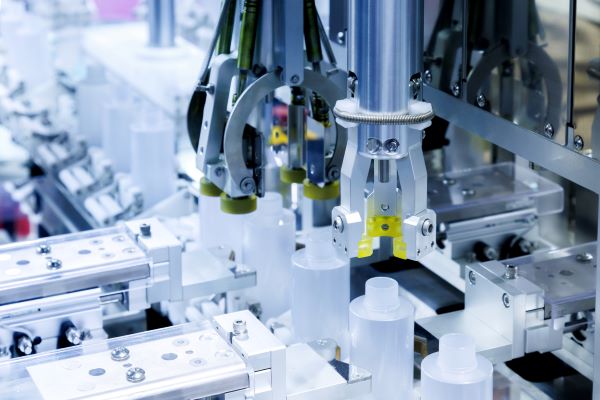
High-volume manufacturers with long production runs and tight tolerances are continuing to invest in advanced automation. Smart machines, robotics, vision systems, and automated material handling are delivering clear benefits in throughput, consistency, and labor efficiency. These environments increasingly rely on intelligent control systems and data-driven optimization to drive results.
However, for many mid-market and contract manufacturers, flexibility remains the real competitive advantage. Shorter production runs, frequent changeovers, and shifting customer demand make full automation difficult to justify from a return-on-investment standpoint. In these environments, the ability to quote, tool, produce, and ship efficiently—then move quickly to the next job—is often more valuable than maximum automation.
Many manufacturers are finding success with a balanced approach: modern, accurate production equipment supported by selective automation, such as simple robotics or assisted material handling, combined with skilled operators and strong execution systems. This model allows manufacturers to stay agile while maintaining quality and reliability.
Integrated Systems Are Becoming a Competitive Necessity
As flexibility becomes more important, integrated business systems are playing a larger role in execution. Manufacturers that succeed in 2026 will increasingly rely on tightly connected ERP and manufacturing execution systems (MES) to coordinate planning, production, inventory, and quality.
These systems help ensure that production decisions are based on real-time data rather than assumptions. They also provide the foundation needed to manage variability—whether it comes from fluctuating material costs, changing customer demand, or capacity constraints.
Rather than relying on automation alone, many manufacturers are using integrated systems to orchestrate people, machines, and materials more effectively. This combination of modern equipment, disciplined processes, and connected data is proving to be a powerful strategy in uncertain conditions.
AI Is Emerging as a Force Multiplier, Not a Replacement
Artificial intelligence and generative AI are gaining traction across manufacturing, but expectations are becoming more grounded. Instead of viewing AI as a standalone solution that replaces human decision-making, manufacturers are increasingly recognizing it as a force multiplier.
AI excels at organizing, summarizing, and presenting existing data in more accessible ways. In office functions such as accounting, purchasing, and inventory management, AI tools layered on top of ERP data can significantly reduce manual effort and improve responsiveness. In operations, AI-driven analysis of MES data can accelerate planning, diagnostics, and performance analysis.
The key realization is that AI is not creating new information—it is making existing information more usable. Much like the internet and mobile devices before it, AI’s greatest impact will be in amplifying individual productivity rather than operating independently.
Pricing Strategies Are Becoming More Dynamic
Ongoing inflation, tariff uncertainty, and material cost volatility are forcing manufacturers to rethink pricing strategies. The era of infrequent price updates is fading. Instead, manufacturers are adjusting pricing more frequently to align with real-time costs. Similar to the consumer goods marketplace, the practice of directly passing pricing increases on to customers has become an accepted practice.
Manually managing this process is increasingly risky. Delays or errors in pricing adjustments can quickly erode margins or reduce competitiveness. As a result, more manufacturers are turning to ERP systems to automate cost-to-price alignment.
The benefits can be substantial. In some cases, manufacturers have reduced pricing update cycles from days or weeks to just hours, while improving transparency and customer communication. In a volatile environment, the ability to justify pricing changes quickly and confidently is becoming a core capability.
Consolidation and Capacity Rationalization Continue
Mergers and acquisitions are expected to remain active in 2026, particularly as the market adjusts to more realistic valuations. Many industries are seeing a mix of first-time sales by owner-operators and second-round transactions between investment groups.
This consolidation is often accompanied by capacity rationalization. Buyers are eliminating excess production capacity and aligning operations with more conservative demand forecasts. While this can be disruptive in the short term, it reflects a broader recalibration after years of optimistic growth assumptions.
At the same time, some investors are positioning themselves for longer-term shifts in demand, acquiring assets now in anticipation of future capacity constraints.
Onshoring and Nearshoring Remain in Flux
Trade policy uncertainty continues to influence sourcing and production decisions. While global supply chains remain interconnected, many manufacturers are hedging risk by expanding domestic and nearshore operations.
Mexico is emerging as a key partner for many U.S.-based manufacturers, offering proximity and capacity without the same level of geopolitical uncertainty as some overseas markets. At the same time, low demand and excess domestic capacity are temporarily masking some of the structural challenges in global sourcing.
Over the longer term, many manufacturers expect domestic capacity utilization to rise again, driven by necessity rather than preference.
Looking Ahead
The 2026 manufacturing trends are prioritizing resilience over bold experimentation. Agility, cost visibility, and disciplined execution are becoming the defining characteristics of successful operations. Automation, AI, sustainability, and supply chain strategies are all important—but only when aligned with realistic business models and supported by integrated systems.
In an environment defined by uncertainty, manufacturers that can adapt quickly, make data-driven decisions, and execute reliably will be best positioned to compete and grow.